
Athens Ancient Sites and Leisure Activities Bring to Life the Legendary History and Culture of Greek Civilization
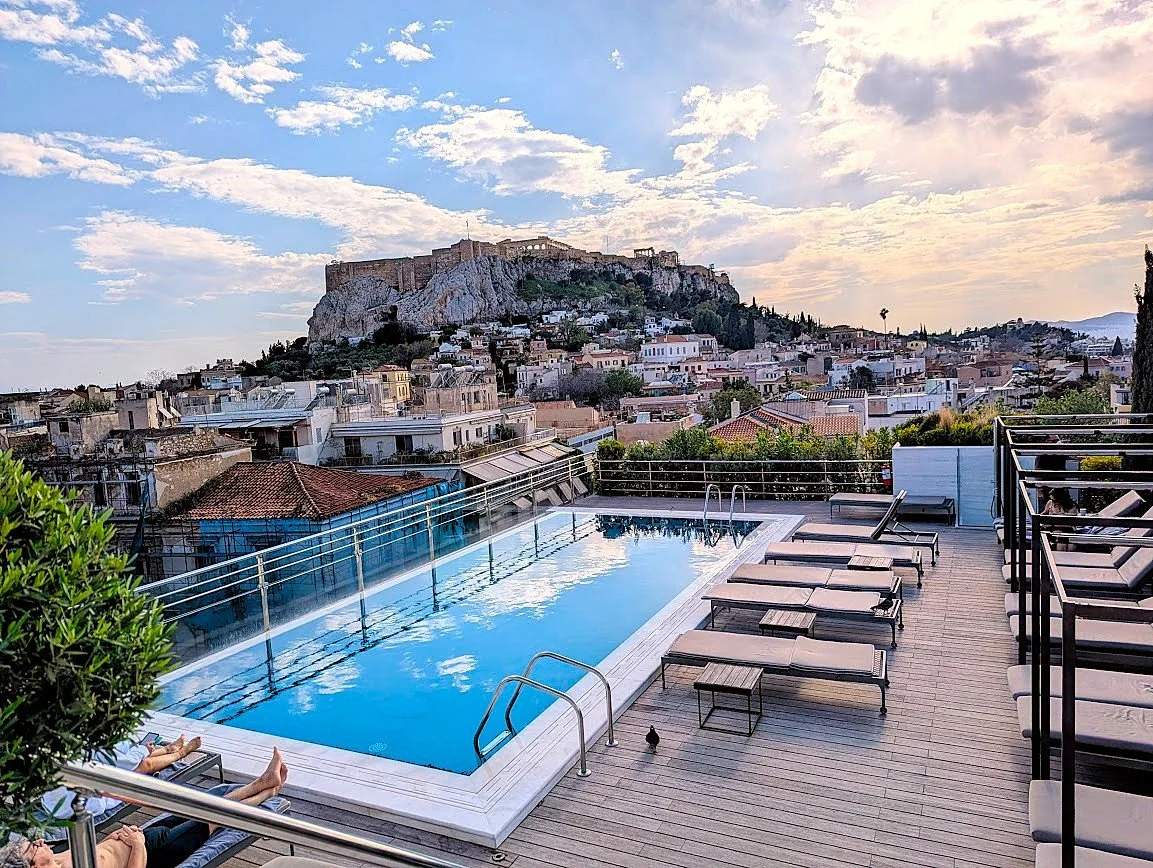
The city of Athens spreads out across miles of plains and the slopes of five surrounding mountains. The metropolitan area of Athens covers the Central City, surrounding suburbs, and the port area of Pireus creating a national capital with a total population of over 3.6 million people. It has been the enduring center of a Greek civilization that once extended to distant cities in Central Asia and around the shores of the Mediterranean. The origins of this brilliant culture and the foundations of western civilization can be explored and brought to life by visiting epic destinations and restored ruins within the historic sections of the city. These sites provide an introduction to the mythological foundation of the gods that were worshiped in Greek culture; show the development of basic concepts of voting, democracy, and jurisprudence; commemorate military victories and painful struggles with enemies and rival cities; and illustrate the philosophies and cultural activities that dominated the classic era of Greece. People visiting Athens can see many of these sites while enjoying leisure activities such as dining, shopping and entertainment in the picturesque areas of the Plaka and Monastiraki by spending several days in the central city. Athens is also an excellent base from which to visit other destinations on Greece's Attic peninsula or travel to the country's many beautiful islands.
Here are some of the most interesting things to do when visiting Athens:
VISIT THE ACROPOLIS
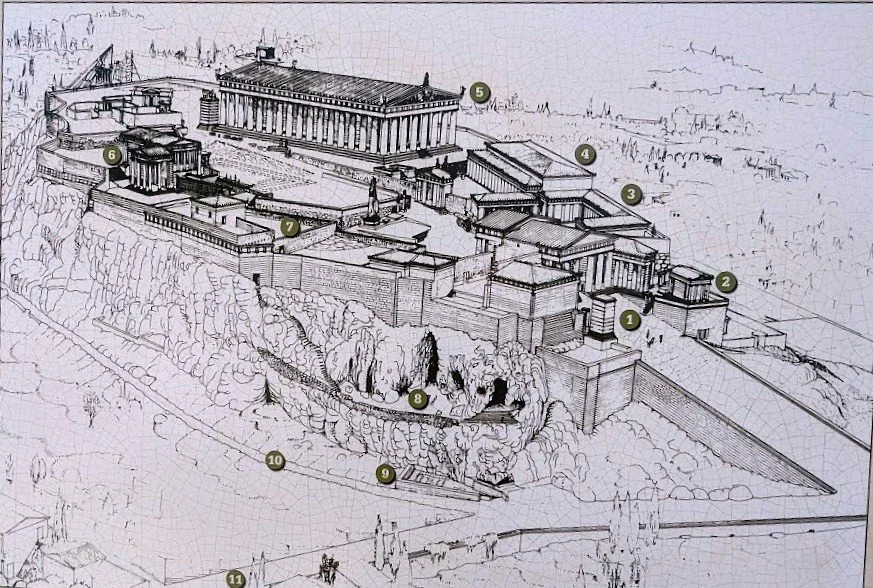
Archaeological sites are virtually around every corner in Athens. But there are few places in the world like the Acropolis where the prominence of one place dominates the city landscape and provides a constant reminder of past history. The sacred rock has steep cliffs on three sides and rises over 500 ft above the surroundings. The stark white color makes it visible from most parts of the city during the day and it shines under spotlights throughout the night. The scene stands in stark contrast to the greenery found in the many parks and gardens of the central city.
The Acropolis was used as a palace and a military fortress as far back as the 13th century BC when the dominant Mycenaian Civilization ruled the area. It continued to be used by the rulers of Athens for religious and political purposes until the buildings there were burned and destroyed by Persian King Xerxes in 480, BC. Despite this destruction, the next hundred years are regarded by many historians as the Glory Days of Athens because of the magnificent structures constructed on the Acropolis during that period. In some respects, the Acropolis could be considered an ancient "ruin" today since only the foundations and walls of some of the buildings remain. However, the impressive reconstruction work completed on the major builidngs has restored substantial sections of the site.
The most impressive sites to see on the Acropolis are the following:
The Propylae- The ceremonial gateway or Propylae of the Acropolis which was constructed around 432 BC is located on the western side of the Acropolis where the slope of the surrounding land is more gradual. This is where most visitors enter the site after walking along a pedestrian street known as Dionysiou Areopagitos. Today, there are a series of steps, paths and walkways that lead up to the ticket booths, metal detectors, and public entrances of the Acropolis. Visitors in ancient times would climb up the same ornate marble steps of the Propylae and enter the site by passing a security checkpoint and walking between two rows of six Doric columns. This entryway was used daily by visitors seeking to perform sacrifices of animals in several temples there including the Temple of Wingless Victory which contained an altar and statues of the Goddess Athena. Other sections of the Propylae are believed to have been used as a picture gallery and places for distinguished guests to rest and dine.
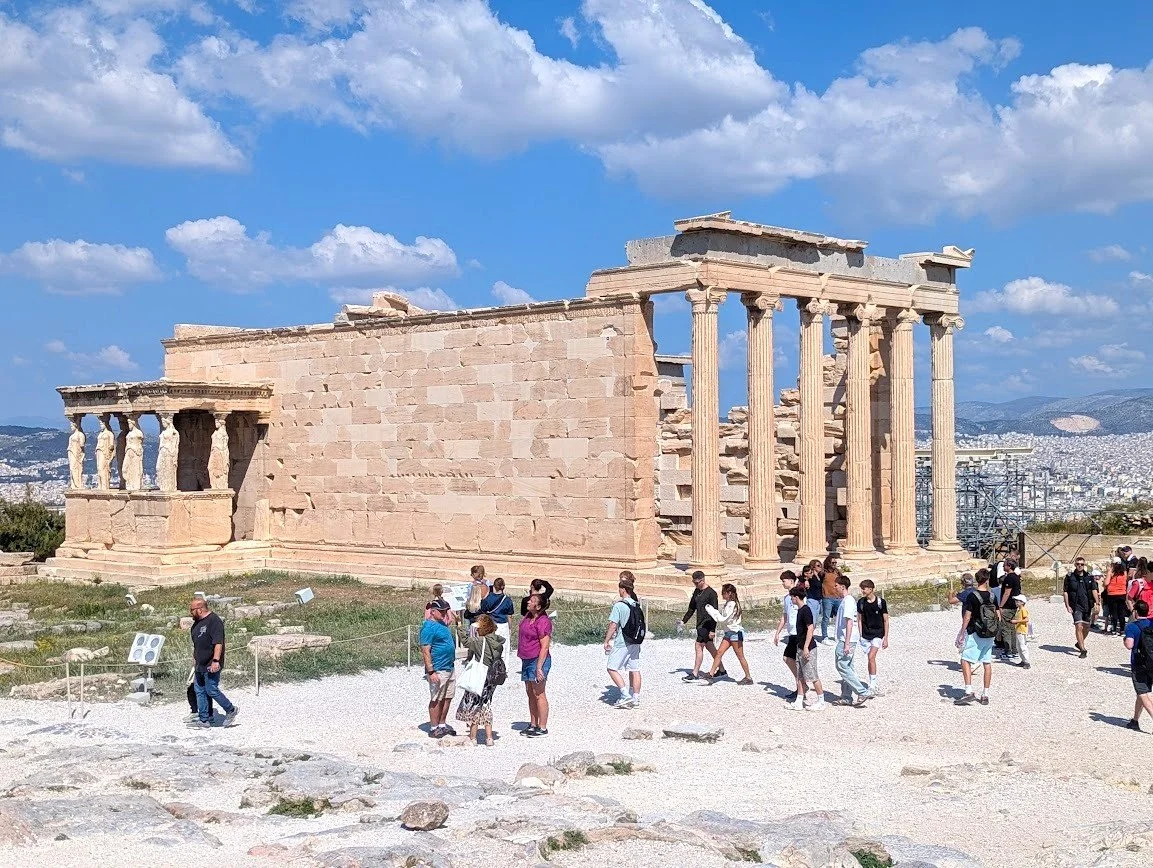
The Erechthion- After entering the site, visitors pass onto a plateau with several prominent buildings. The large building on the left side of the Acroplis is known as the Erechthion. It is named after an ancient Greek king believed to have been a founder of the city. The mortal man named Erecttheus was worshipped in the buidling along with the the gods Poseidon and Athena who both were considered to be the patrons and guardians of Athens. The building was completed in roughly 406 BC after the Pelopennesian War. Its most popular feature is the statues of six maidens known as the Caryatids whose female figures are used instead of columns to hold up the roof of the southern porch of the building.
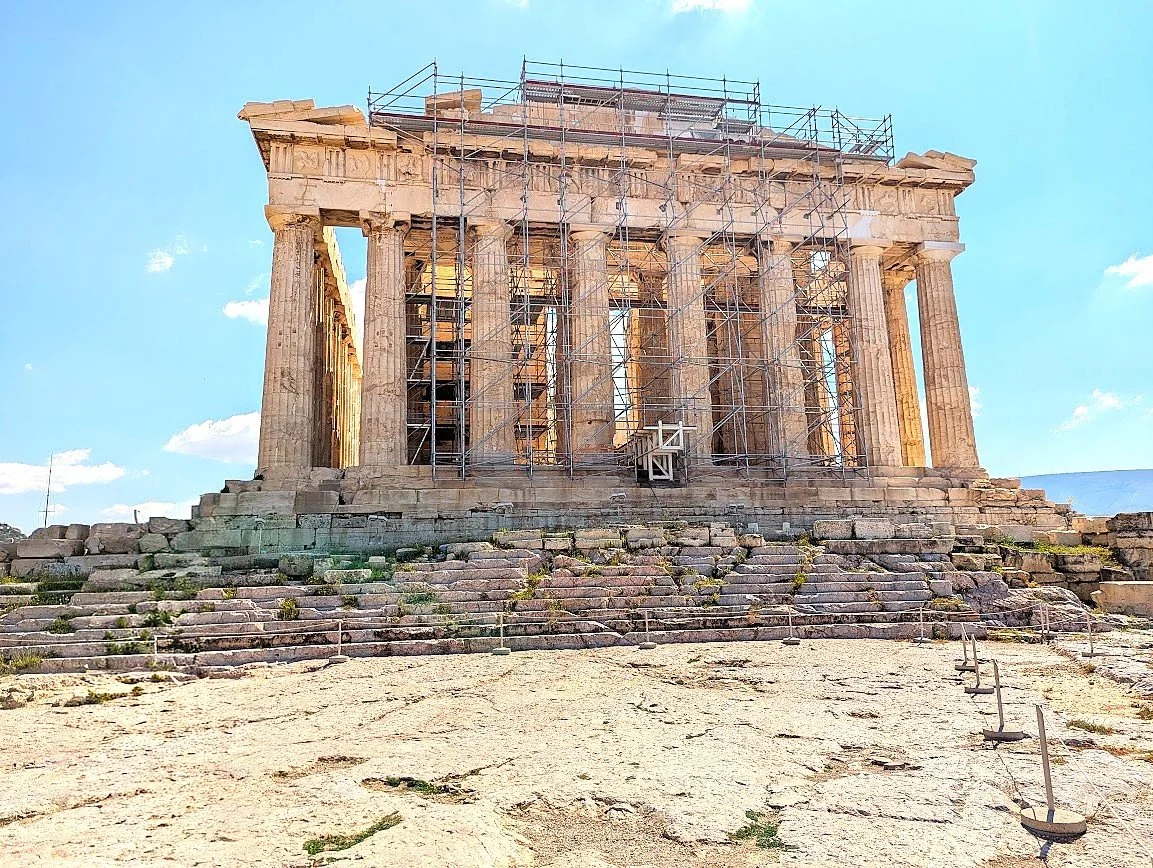
The Parthenon- The crowning achievement of classic Greek architecture was the construction of the Parthenon in 432 BC by a team of renowned architects and sculptures. The interrior and roof of the buidling, and many of its friezes have long disappeared through the passage of time, bombardment by the Turks in 1687, and the appropriation of many pieces of the building by British Lord Elgin in 1802. Nevertheless, Greek authorities decided almost fifty years ago to reconstrct the Parthenon's exterior walls using a huge crane and the same Pentelic marble that ancient builders had selected. In October 2025, this successful effort allowed the site to be viewed without scaffolding briefly for the first time in generations. Most of the outer shell is now intact so visitors can see the white marble base and the limestone platform on which the building was constructed. There were originally a total of 46 large circular columns arranged in a rectangular shape on the outside of the structure which provided support for a slanted roof. Each column is 34 feet tall with seventeen columns along the long side of the Parthenon and eight coumns along each end. Forty-two of these columns have now been reerected. Work continues on the remaining outside columns, the two dozen interior columns, and the sacred inner chamber called the Cella. In antiquity, this interior room housed a 40-foot-tall ivory and gold statue of the goddess Athena.
VISIT INTERESTING RUINS ON THE SOUTHERN SLOPE OF THE ACROPOLIS
The southen slope of the Acropolis is filled with the ruins of several important buildings dedicated to the cultural and intellectual activities of Athenians which were opened during the classic era of Athens and later expanded under Roman rule. People entering the Acropolis throught the southern entrace will first see the area where the Odeon of Pericles was built in 442 BC by the gifted Athenian leader as part of his extensive public building program. Used for musical performances and lectures, this structure was known for its large covered roof built to resemble the tent of Persian King Xerxes. It was renovated several times but eventually destroyed by Germanic invaders in 267 AD.
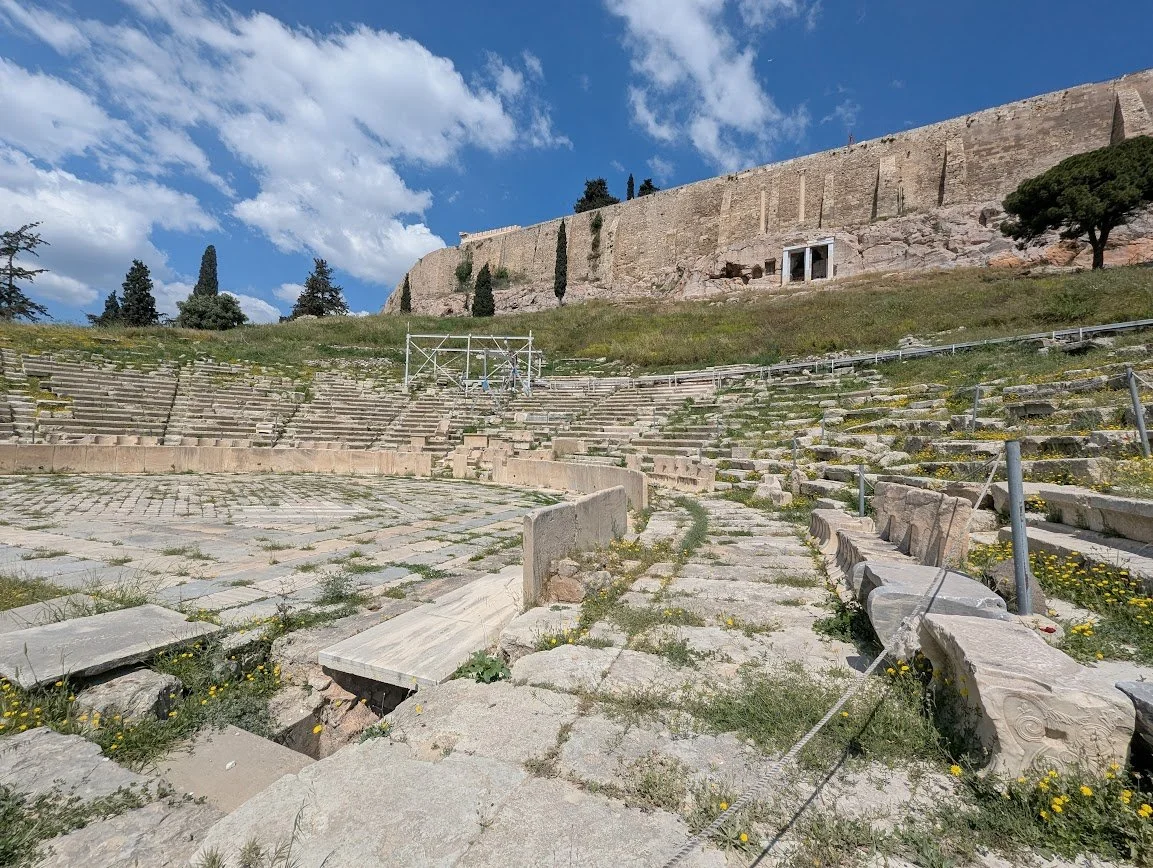
The Theater of Dionysus is considered by some experts as being the birthplace of performing arts. It was built in the sixth century BC by using the natural rock formations of the hill as an ampitheater and remained in use until the fifth century AD. The theater hosted religious festivals such as the Great Dionysia held annually to honor the God of WIne and Festivities. The theater is respected for being the venue where legendary playwrights presented three forms of ancient drama - tragedy, comedy and satyr. The earliest version of the theater was built of wood and then improved later by the Athenians in the third century BC and by the Roman Emperor Nero in 62 AD. These modifications set an architectural standard for ampitheaters by featuring ranked tiers of stone seats, a raised stage area known as the orchestra, a stage backdrop and seating for an estimated 17,000 spectators. Today, the stage and the first twenty rows of seats are still visible including the names of the officials and other VIPs who were seated there.
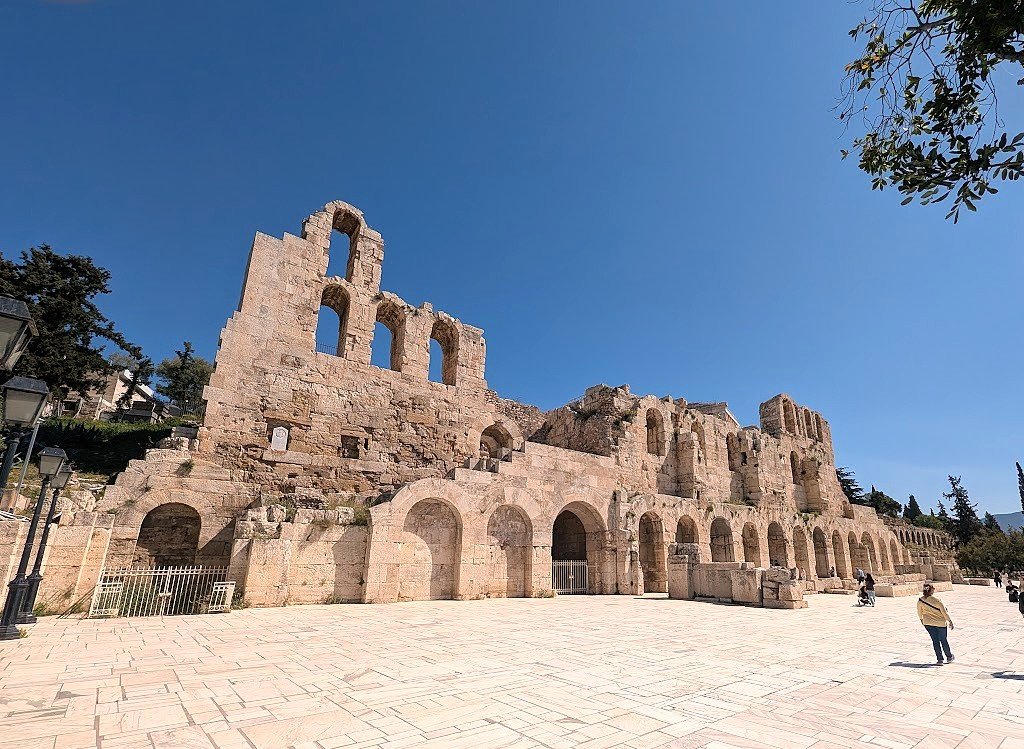
The largest structure on the southern slope of the Acropolis is the Odeon of Herod Atticus built in 162 AD by a wealthy philosopher to honor his wife. Used primarily for musical performances, the large stands seating 5,000 people were constructed of marble and once covered by a cedar roof. Destroyed by Germanic raiders in 267 AD, it was abandoned for over 1800 years until rebuilt in 1954. The modern open air theater preserves the Roman stage wall of the ancient structure and is still used for dramatic performances and concerts.
VIEW THE ANCIENT MARKET
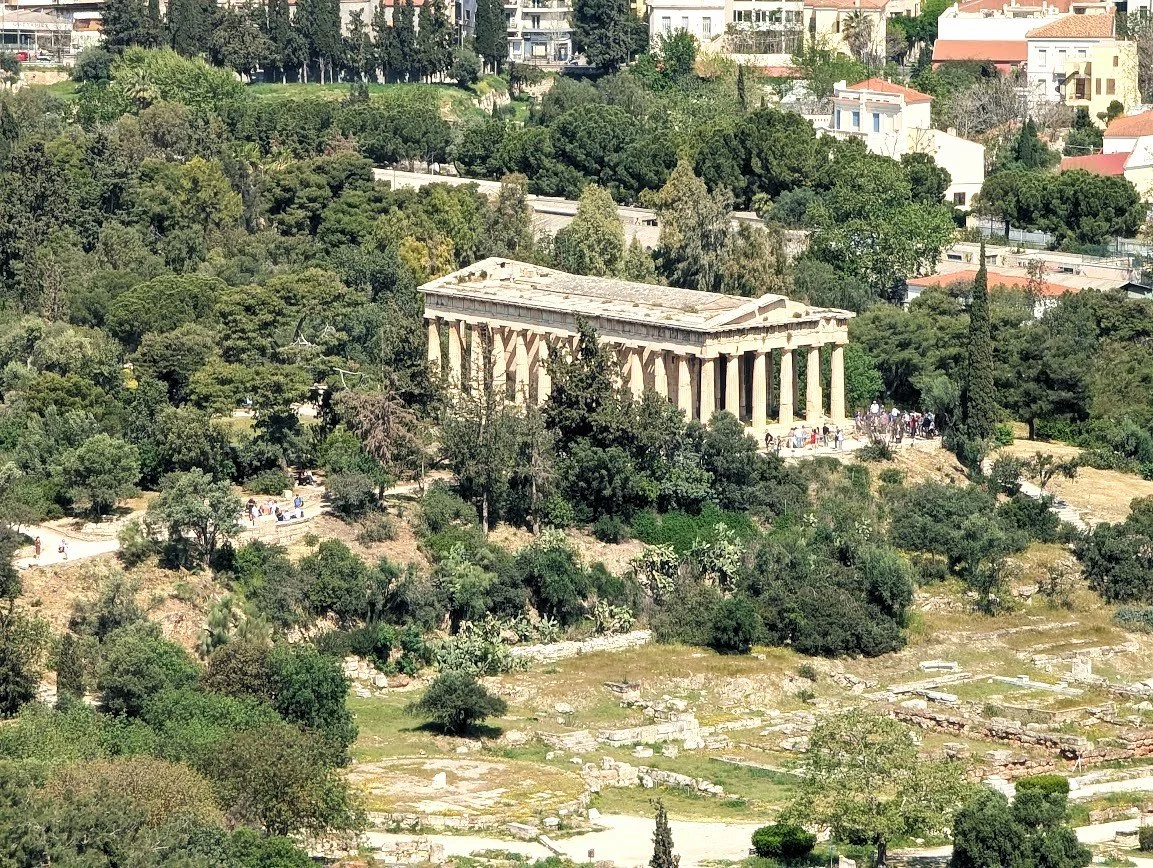
The large green area and plain to the northwest of the Acropolis was the site of the city's Agora or market for centuries. Originally used for all sorts of public buildings, it evolved into the principal place where commerce as well as legal and administrative functions were conducted. The two most prominent remaining buildings there are the Temple of Hephaistos built to protect various craftsmen and the Stoa of Attalos built by a prominent philosopher and presented to the city for commercial use , meetings and recreation. The Stoa was destoyed centuries ago but then rebuilt in the 1950s to resemble the original building. It serves now as the Museum of the Ancient City Market. Both buildings are interesting to see. The entire area can be best viewed and appreciated from the west side of the Acropolis. You can do this by pausing on the exit stairs from the Acropolis near the Propylaea, or by walking down from the Acropolis and climbing onto a rocky hill there known as Mars Hill or the Rock of Areopagus. This rocky outcropping served as the location for the high court of Athens in classic Greece and is believed to have been a place where the Apostle Paul proselytized to convert the pagan Romans and philosophers of Athens to Christianity.
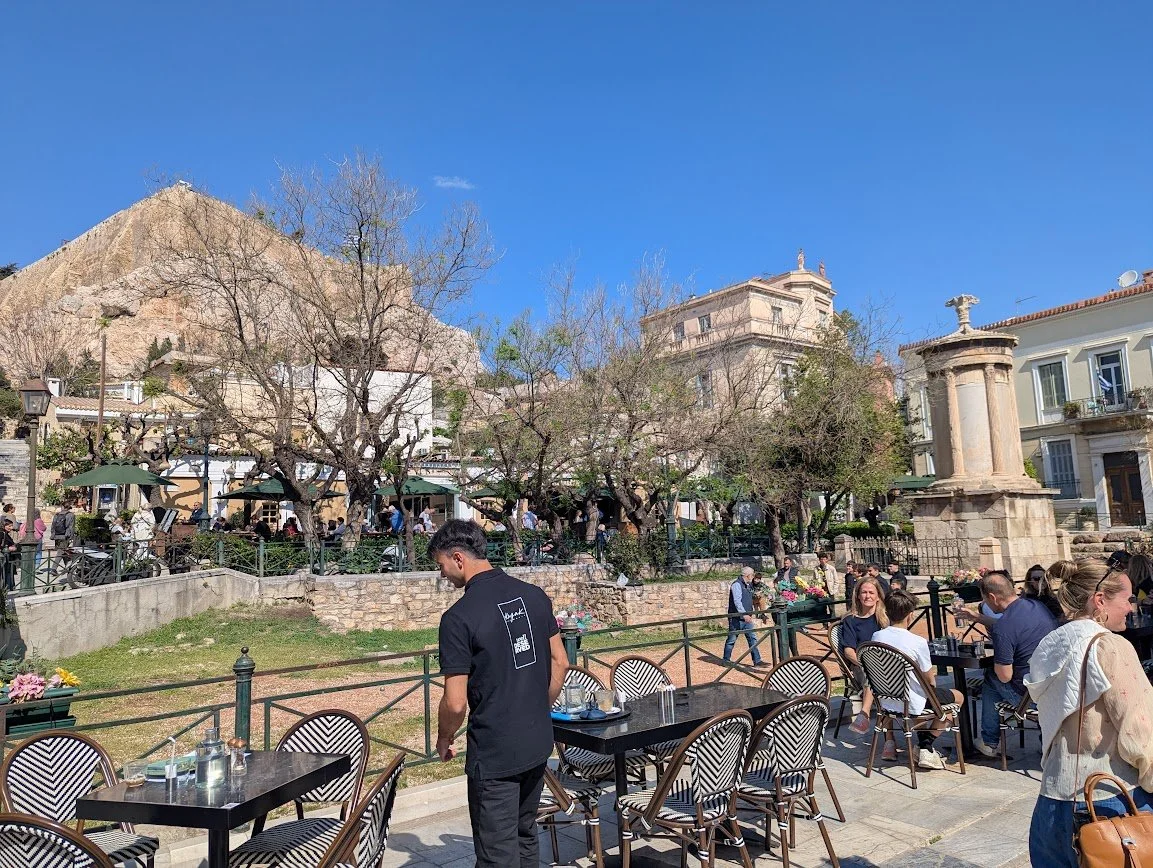
EAT, DRINK, SHOP AND RELAX IN THE PLAKA AND MONASTIRAKI SECTIONS OF THE CENTRAL DISTRICT
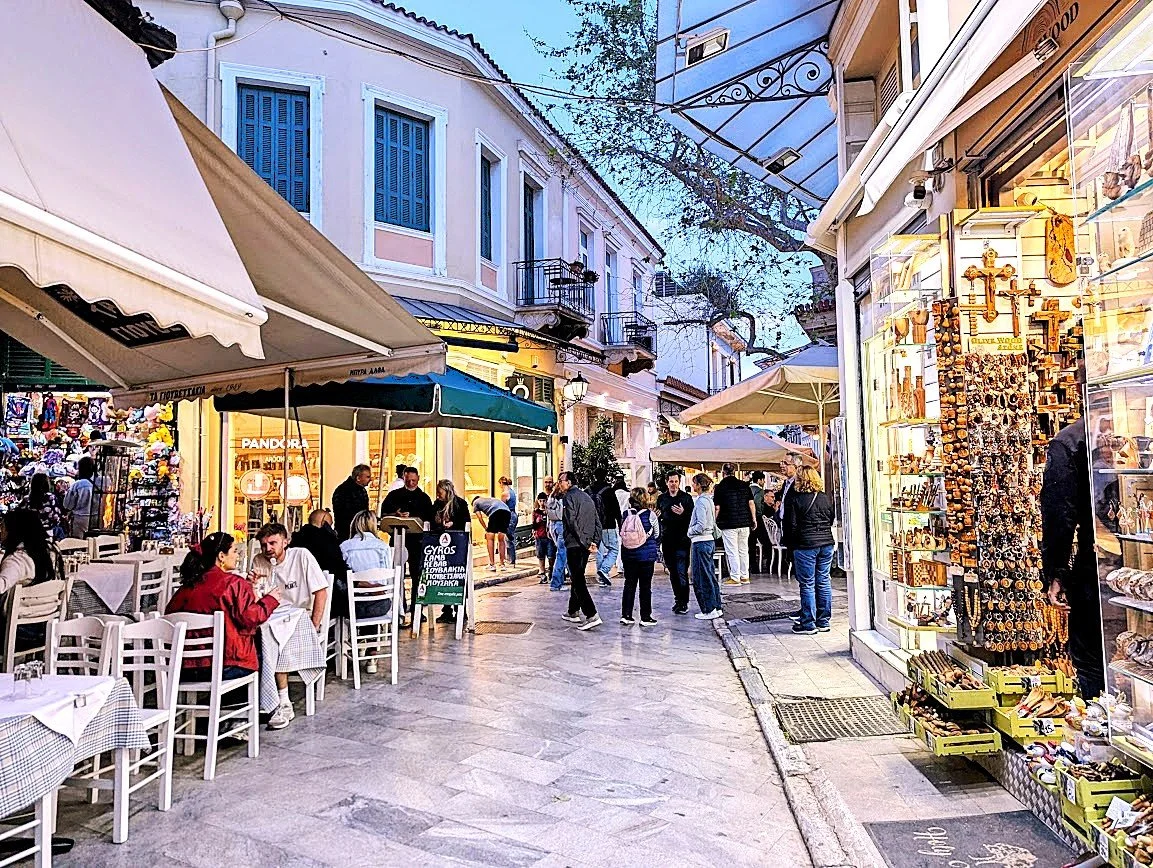
For many people who visit Athens, the experience of staying at a boutique hotel in The Plaka neighborhood of the Central District and wandering its narrow streets and alleys to eat and shop is an essential part of enjoying the city. Often referred to as one of Europe's oldest neightborhoods since it has been occupied for over 3000 years, it has experienced the rise and fall of ancient Greece, the Western Roman Empire, the Byzantine Empire, and the Ottoman Era while preserving elements of their cultures, buildings and ethnic residents. The Plaka is generally considered to be the area to the east of the Acropolis up to Syntagma Square and north of the Acropolis up to Monastiraki Square. Like many of the "Old Towns" in Europe, it is best explored on foot as its narrow streets are not conductive to driving or parking. Much of The Plaka is open only to pedestrians who can browse the shops, purchase local goods and sovenirs, dine at traditional Greek and other restaurants, visit important landmarks, and enjoy numerous museums there. It is a great place to stop at cafes to chat with friends or make new ones.
The mixture of buildings found in this area is truly astounding. You will see ancient Roman columns next to neoclassical houses, Byzantine churches, and some modern structures. The principal landmark of the area is the towering cliffs of the Acropolis which can be seen from dozens of rooftops. Many guests can dine, swim or enjoy the Acropolis view by day or at night when the elevated site is brightly illuminated. Another popular destination in The Plaka is Lysicrates Square where restaurants and cafes surround a small park that includes a monument dedicated to the city by Lysikratos to commemorate the victory of a local theatre in a Dionysia competition in 334 BC. Some visitors and locals prefer to spend their time in the more accessible areas of Ermou Street and Monasatiraki Square. While tourists, street performers and young people like to hang out close to Monastiraki Square, this neighborhood has a more upscale feel with brand name and international stores, art galleries, and outdoor restaurants adjoining the parks and squares.
PONDER THE EXHIBITS AT THE ACROPOLIS MUSEUM AND THE ARCHEOLOGICAL MUSEUM
The spectacular buildings and grounds of the historical and archeological sites in the city leave visitors with a sense of the grandeur and wonder about classical Greek life and later Roman activities in Athens. When visiting this city, it is easy to imagine the worlds that existed during these times and the renowned people who lived then. In order to understand the finer details of how those people lived and see remnants of the objects and artistry they left behind, it is useful to visit two museums in Athens. The Archeological Museum founded in 1866 is located several miles north of the Acropolis and contains over 11,000 objects covering prehistory and late classical Greek times. Everything from pottery to jewelry to statues and wall paintings can be found there which brings to life those civilizations. Two famous objects there are the golden death mask of an unknown king of Mycenae from the 1500 BC originally presumed to be Agamemnon along with a bronze statue recoverd from a shipwreck of a god throwing a trident or thunderbolt presumed to be Poseidon or Zeus from the fifth century BC.
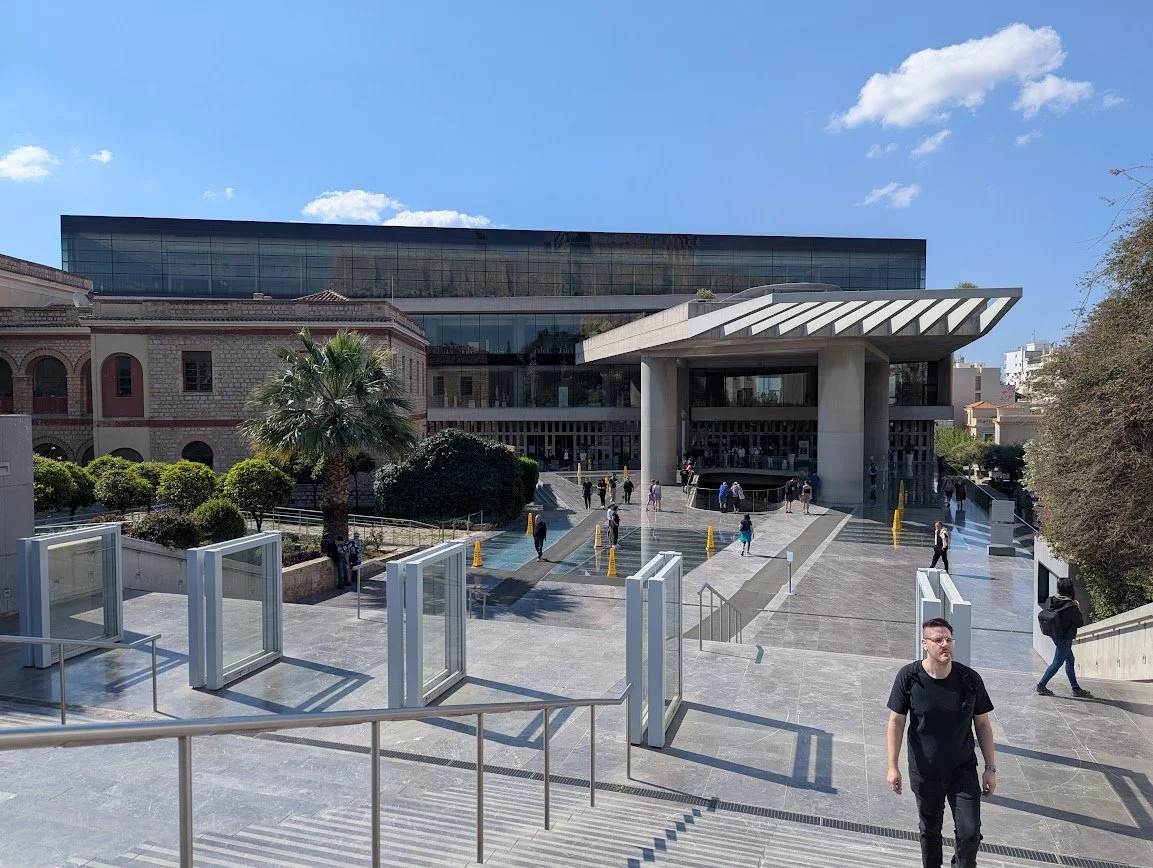
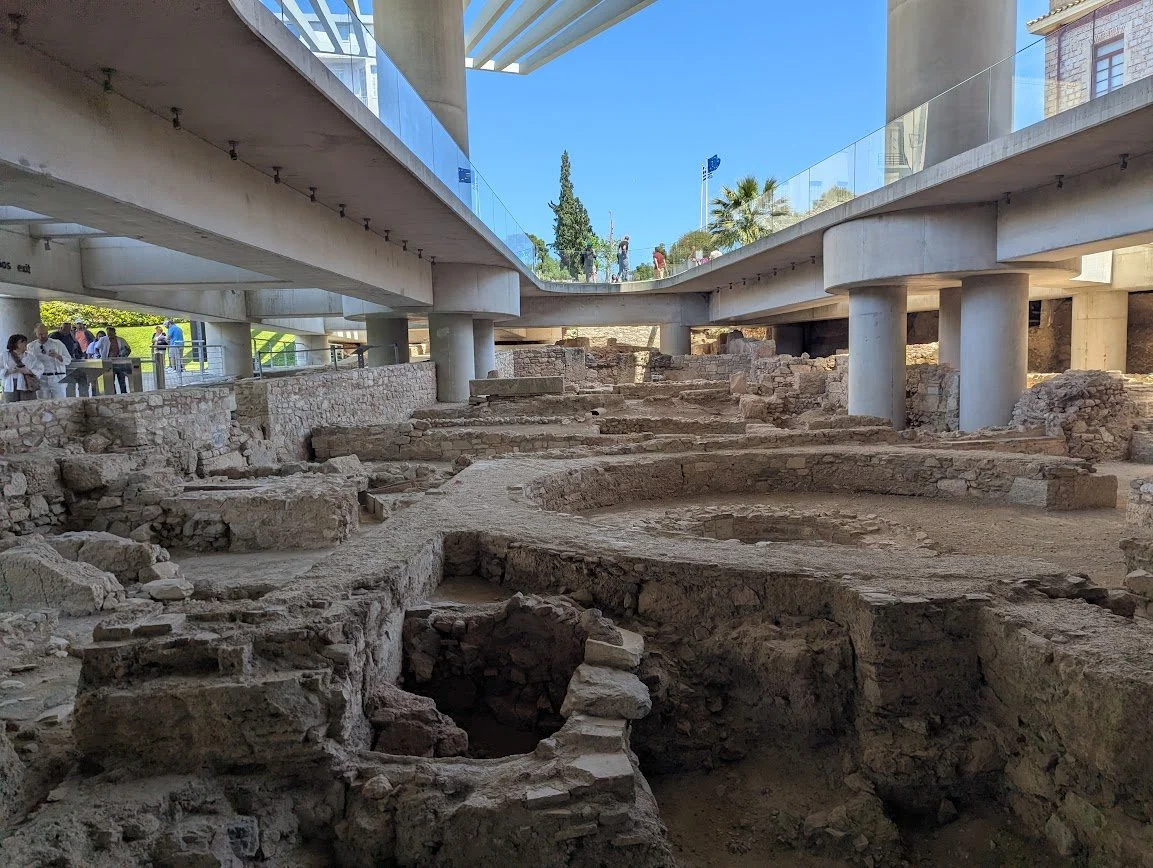
The New Acropolis Museum near the Sacred Rock is an important part of the Acropolis experience. SInce it opened in 2009, the museum has attracted thousands of visitors daily and roughly two million visitors each year. It was designed to be a home for the protection and celebration of the treasures of the Acropolis and the Parthenon from the Greek Bronze age to Roman and Byzantine Greece. One notable feature of the museum is the Parthenon Gallery featuring a 525 foot long continuous frieze consisting of 115 slabs showing a procession of humans and animals at a historic Athenian event. Another unusual exhibition area enjoyed by some is an ongoing archaeological excavation beneath the building of an entire ancient neighborhood. The obvious success and painstaking efforts of experts to reassemble and dispaly without reconstruciton hundreds of statues and objects from 2000 or more years ago provides visitors with a new perspective on archeology.
SEE OTHER NOTABLE DESTINATIONS IN THE CENTER OF ATHENS
The expansive reach of Athens in every direction makes the city appear to be crowded and unorganized at first glance. But once you settle into a hotel or residence in the central district, there are green areas within walking distance in every direction and numerous other landmarks, interesting places, and activities to enjoy. Here are some notable places to consider along with the historic ones cited previously:
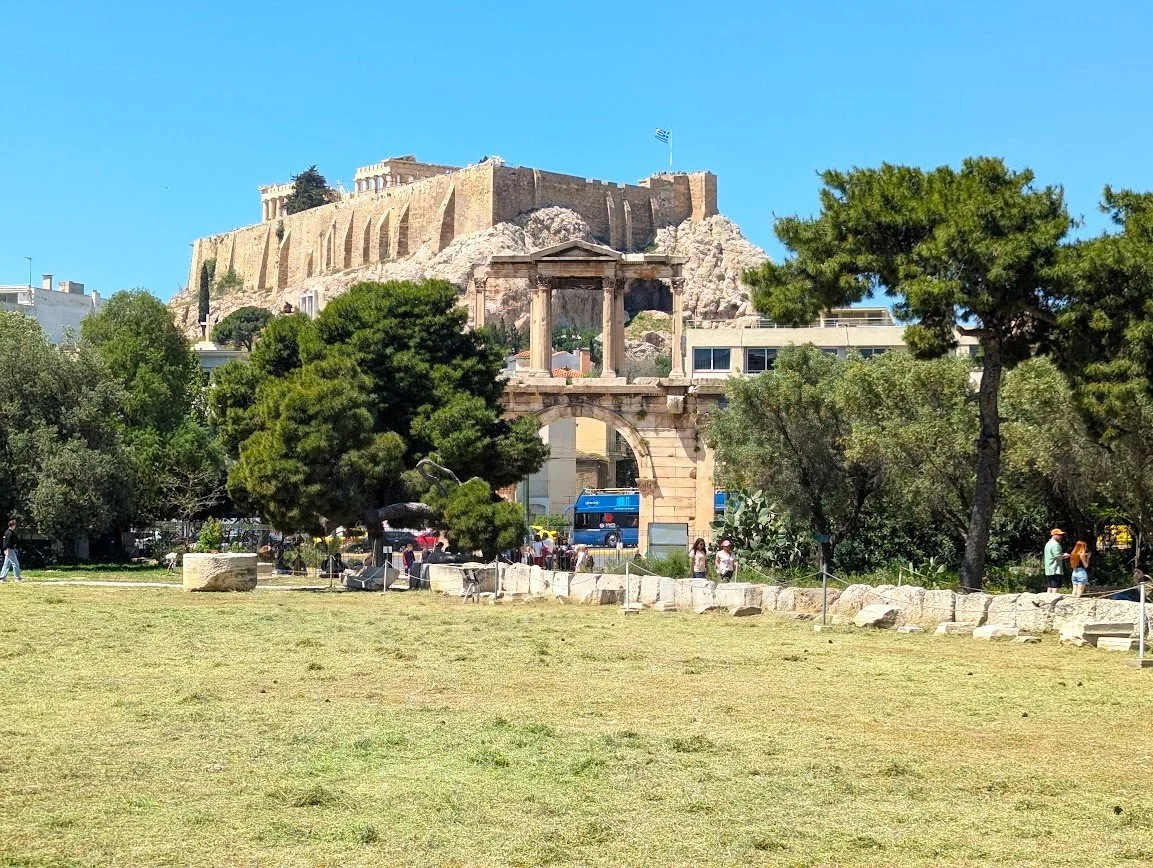
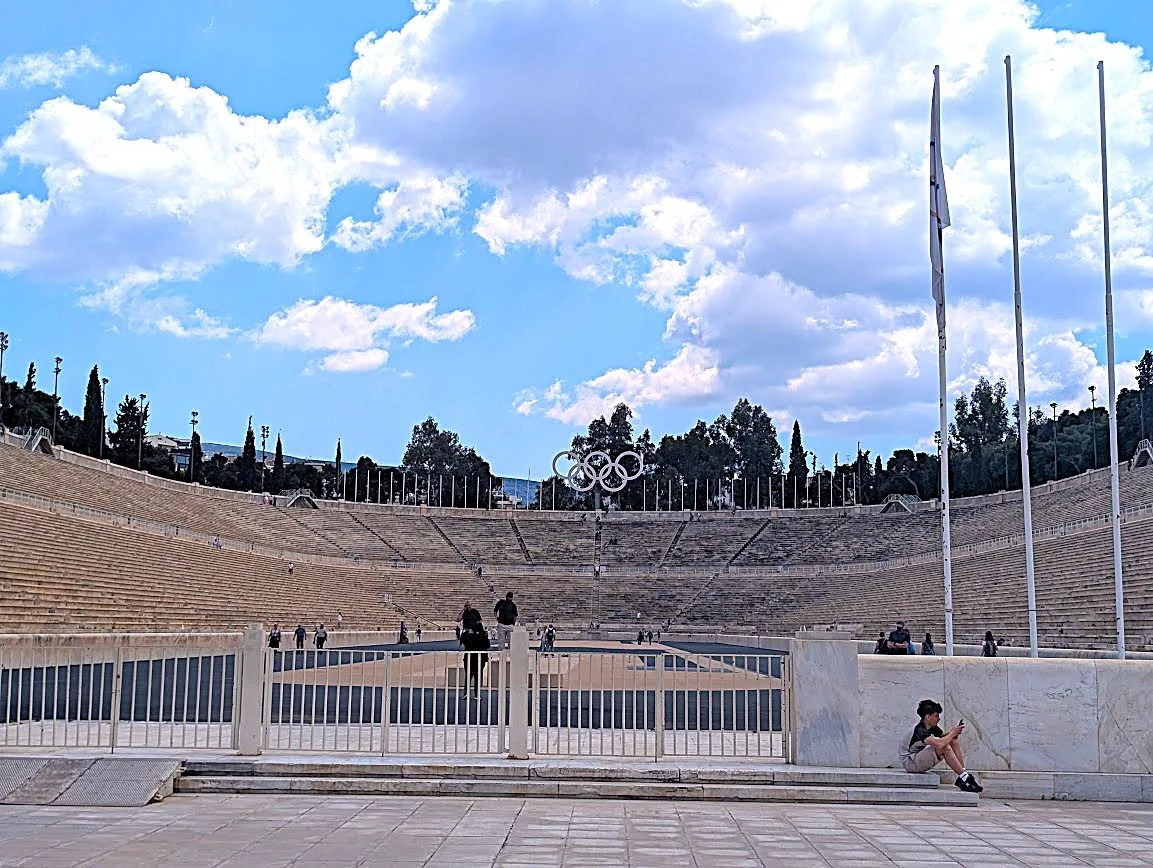
Illisos Landmarks and Panatheniac Stadium - The Ilissos River once flowed through the heart of Athens but during the 20th century, its waters were largely channeled under roads and tram tracks except for an open air section near several landmarks southeast of the Acropolis and Syngrou Avenue. While the riverbed is nothing to look at, there are landmarks and archeological structures of interest there. This area was used in ancient times for worships activities and is believed to have been one of the first inhabited areas of the city. The gateway to the Illisos monuments is marked by a triumphal arch of Corinthian style that was erected in 131 AD to honor the Roman emperor Hadrian on a visit to Athens. He is credited with later completing work on the Temple of Olympian Zeus which was erected sporadically over eight centuries beginning in the 6th century BC on an open field nearby. Once the largest temple ever constructed in Greece, the 15 remaining columns standing on the site only hint at the grandeur and scale of the original building. The temple contained a gold and ivory statue of Zeus and an estimated 104 columns each standing 55 feet tall and weighing 364 tons.
This is also the best route to follow to reach the iconic Panatheniac Stadium. Originally built in the 4th century BC, the stadium was expanded by Roman Emperor Herodes Atticus in 144 AD into a horseshoe shaped marble structure holding up to 50,000 people. Abandoned for almost two thousands years thereafter, the stadium was resurrected again using new marble in 1896 to host the first modern Olympic Games. This landmark continues to serve as a venue for historic events such as the 2004 Olympics, Olympic flame handover ceremonies, and the Athens Marathon. Visitors enjoy sitting on the marble seats to gaze out at the grounds, walking around the track as part of a guided tour, and posing on the Olympic medal platform.
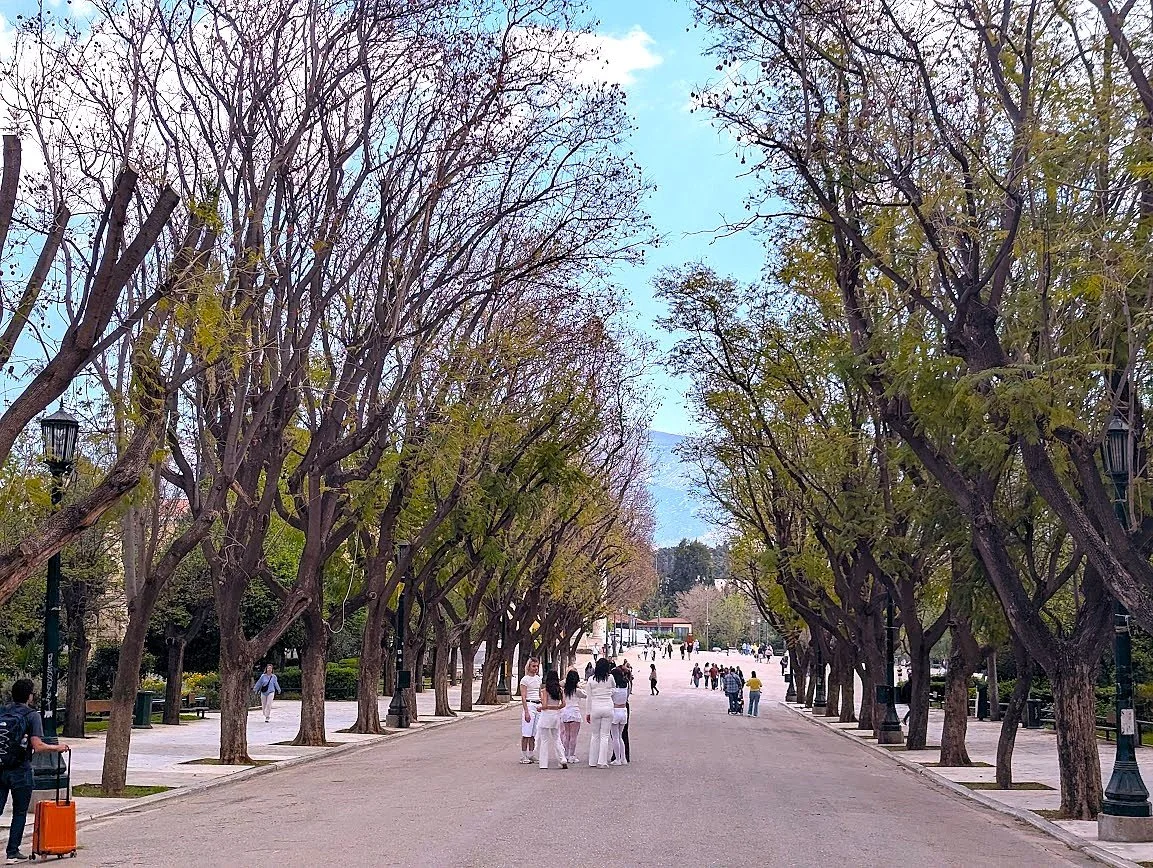
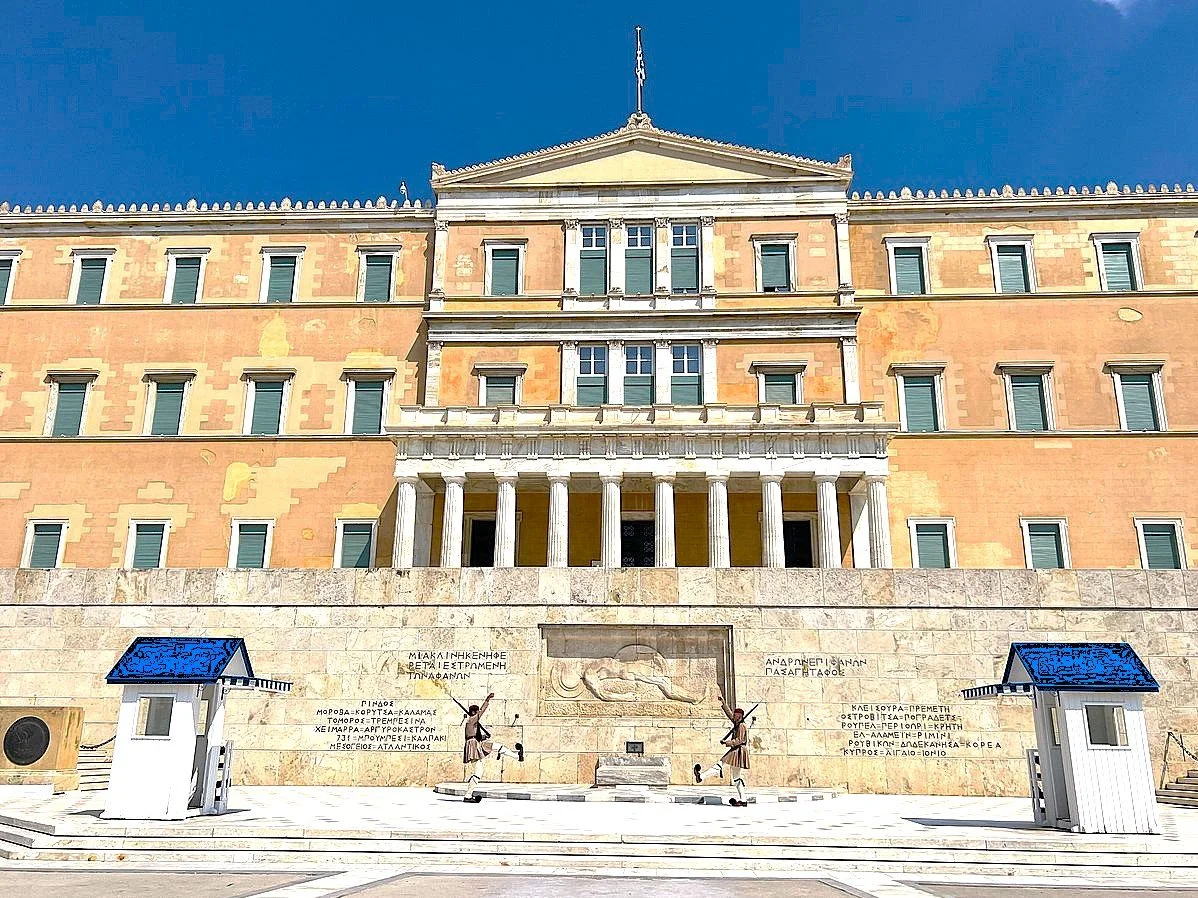
National Gardens and Parliament Building- Another pleasant place to escape the summer heat or the busy streets of Athens is to visit the National Gardens located to the north of the Illisos Landmarks and across the street from the Panatheniac Stadium. Created as a park for the royal family in the 19th century, the gardens have walking trails, mature trees, a botanical garden, and scattered small ruins. There is also a huge neo classical buidling known as the Zappion Mansion with an impressive gate and entranceway that is used for important conferences, exhibitions, and polticial events. Nearby in other sections of the National Gardens are three governmental structures of note - the Presidential Mansion which served as the royal residence from 1897 to 1974, the Megaro Maximou Mansion which serves as the offical workplace of the Prime Minister of Greece, and the Greek Parliament Buidling. The Parliament Building was originally built to serve as the King's Palace in 1842, but it was renovated into the official house of the Greece Parliament in 1929. The Memorial to the Unknown Soldier located outside the building is guarded by two Greek soldiers clad in traditonal uniforms. The changing of the Guard ceremony which takes place at two hour intervals is a popular activity for visitors to the city.