
Pergamon’s Acropolis and Medical Sanctuary Show the Majesty of the Attalid Kingdom- Bergama, Turkey
What is It – Alexander the Great toppled empires and created new ones throughout the eastern Mediterranean and Eurasia beginning in 336 BC to 323 BC. After his death, his generals divided up his wealth and the many lands he had conquered among themselves. One general’s underling named Philetaerus took over a small mountain city in western Turkey and used Alexander’s resources to create a splendid city there. That city became the capital of the Kingdom of Pergamon. Its rulers, known as the Attalid dynasty, controlled the western and southern portions of Asia Minor for over 150 years. Pergamon’s riches and power allowed the city to build a mountainside theater, magnificent temples, a huge library, and a medical sanctuary or Asklepion that were renowned throughout the ancient world.
The last king of the dynasty named Attalus III bequeathed his entire kingdom to the Romans upon his death in 133 BC. Pergamon became the capital of the Roman province of Asia and boasted a population that exceeded 200,000 during the Imperial Roman era. The city continued to thrive during the early years of the Byzantine Empire but gradually deteriorated through earthquakes and regional wars before being abandoned in the seventh century AD. Over a millennium later in 1860, German archeologists excavated the site and removed portions of temples and other artifacts to the Pergamon Museum in Berlin. Today, archeologists continue to uncover new sections of the ancient city including the aqueducts that provided precious water to the mountain top, the extensive facilities used by the Asklepion, and a large residential complex from Roman times. The location was designated as a World Heritage Site by UNESCO in 2014 because of the natural topography and layering of multiple cultures and empires.
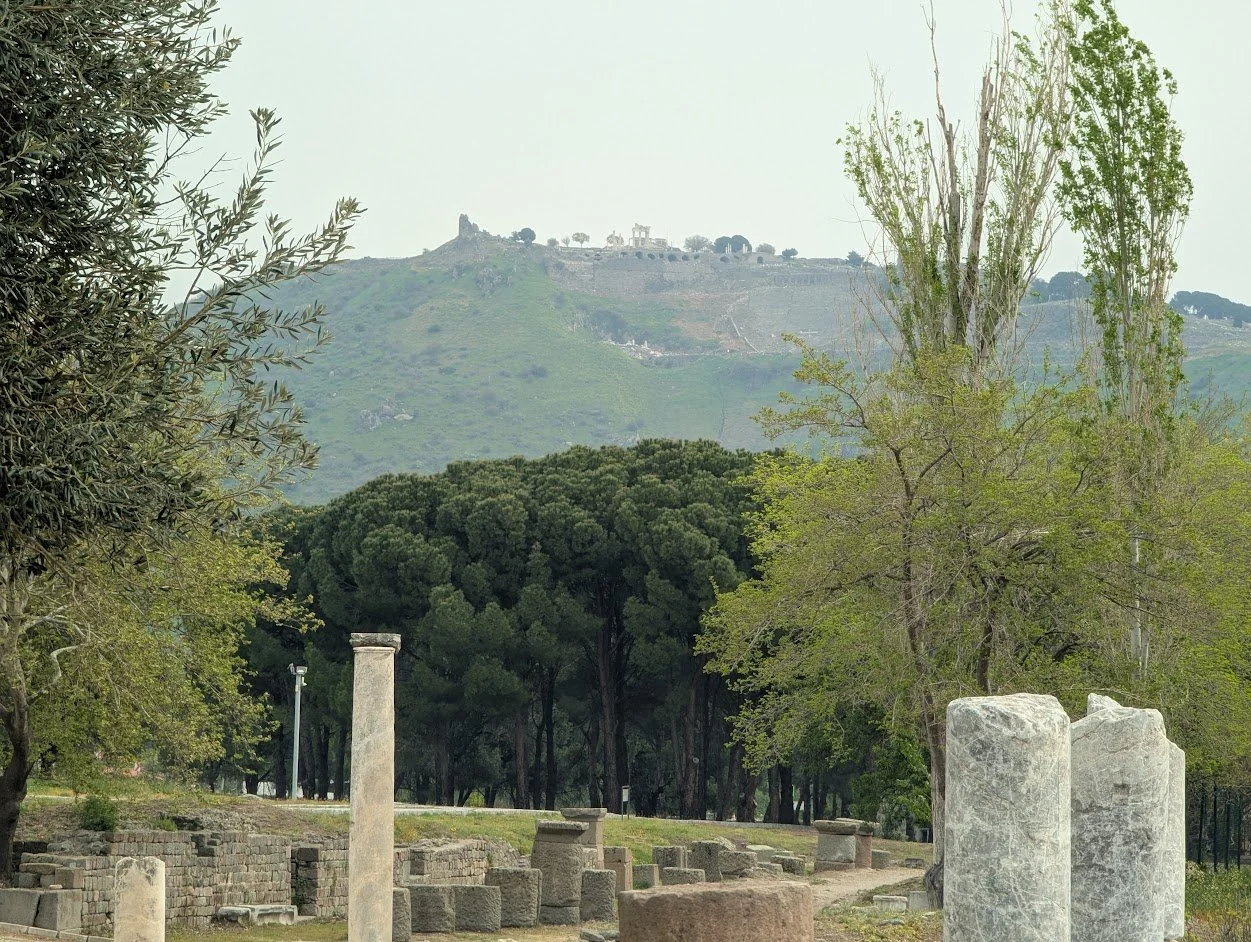
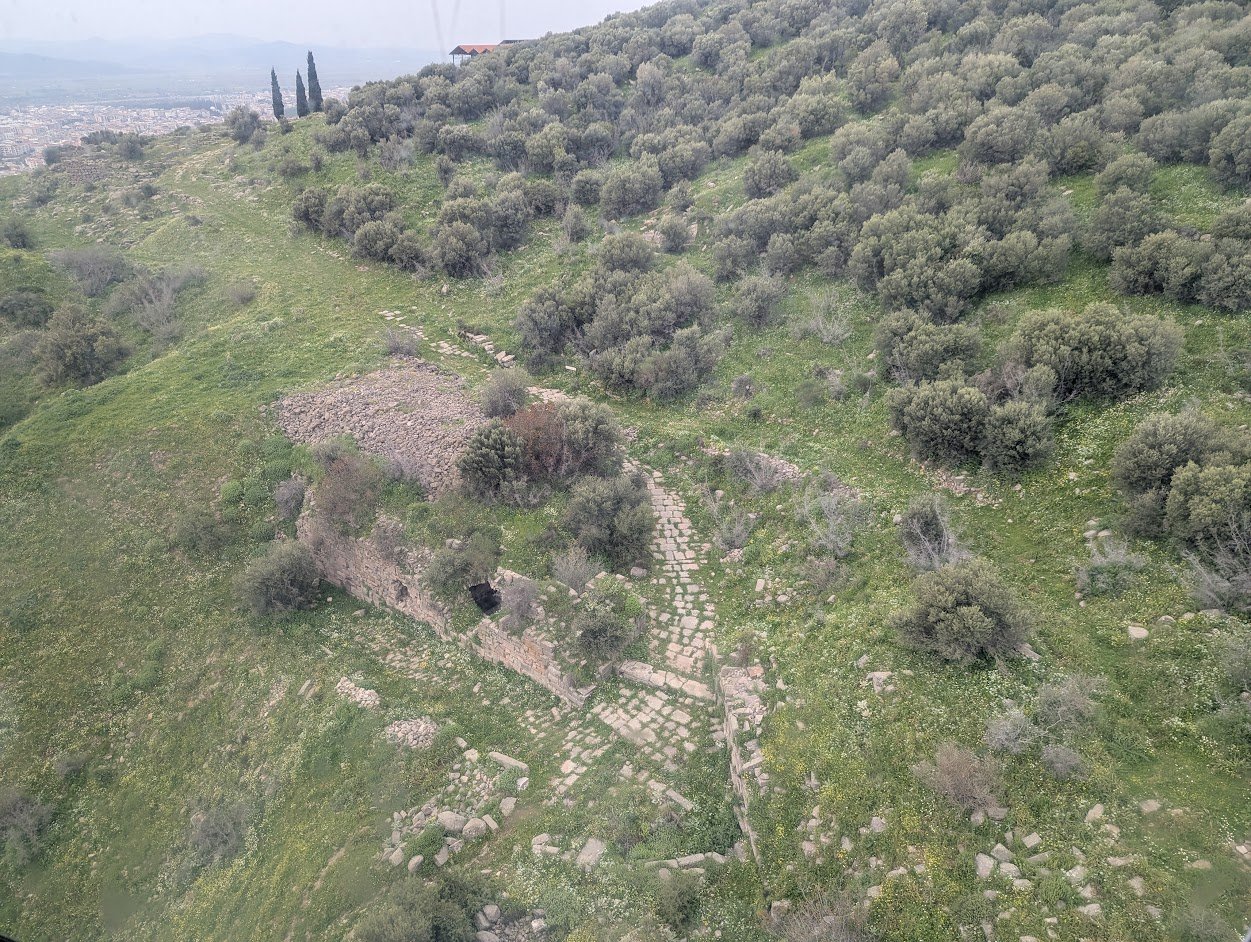
Things to See There - The picturesque location of Pergamon adds a sense of grandeur to a visit there. Most people reach the upper city by riding an eight-passenger funicular up the mountain to a landing area where ticketing, bathroom facilities, and small souvenir shops are located. Along the way you will see a series of terraces where people once lived and remnants of the large defensive walls that once surrounded the city. The view from the top of the mountain is spectacular. You can look out for miles in every direction including seeing the two rivers behind the Acropolis, the Asklepion below, and surrounding plain. Some ruins of the upper city may be disappointing because it requires some imagination to visualize the majestic temples and palaces that once stood there. But the fascinating history of the location enhances the experience.
The following places are worth seeing and learning about at Pergamon:
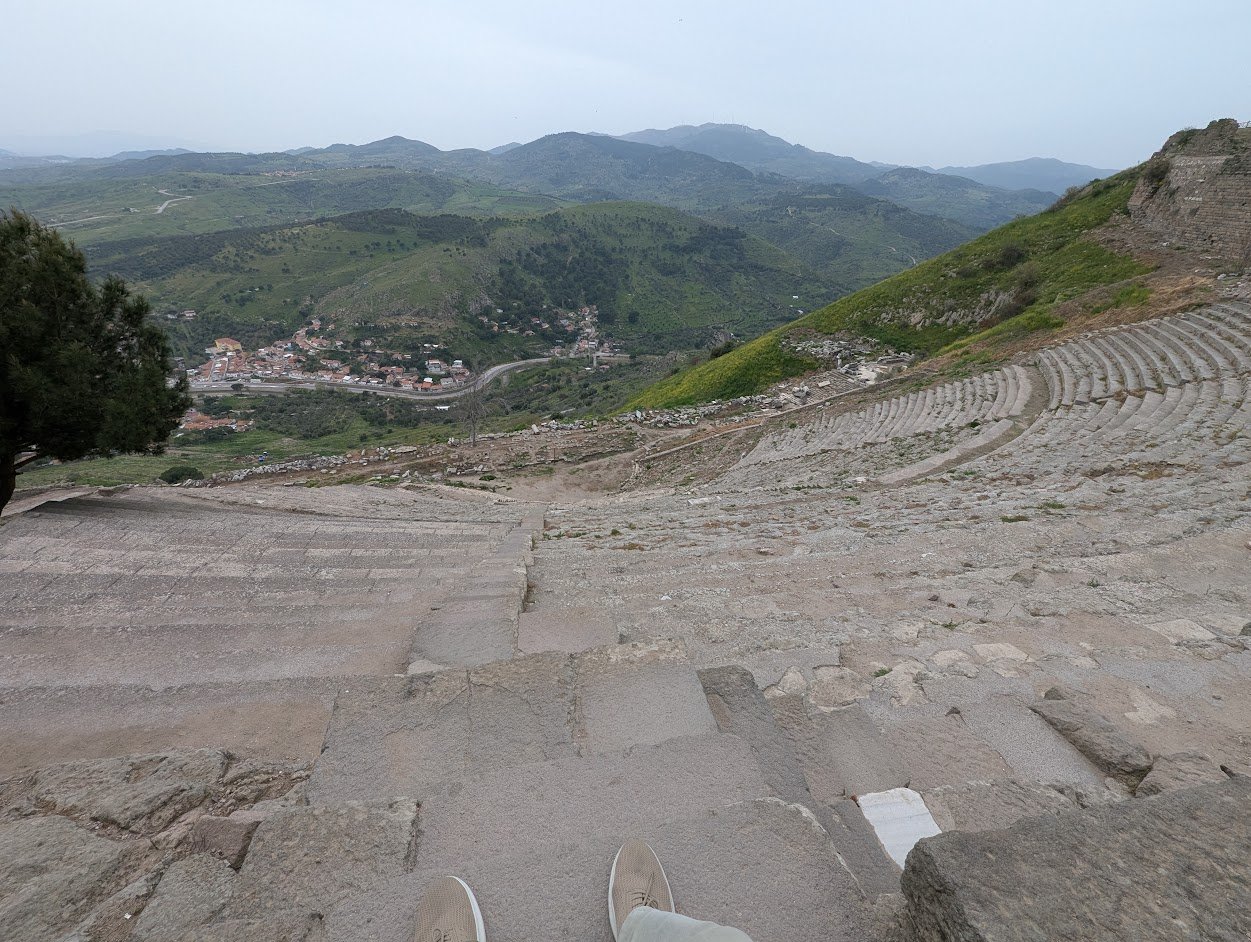
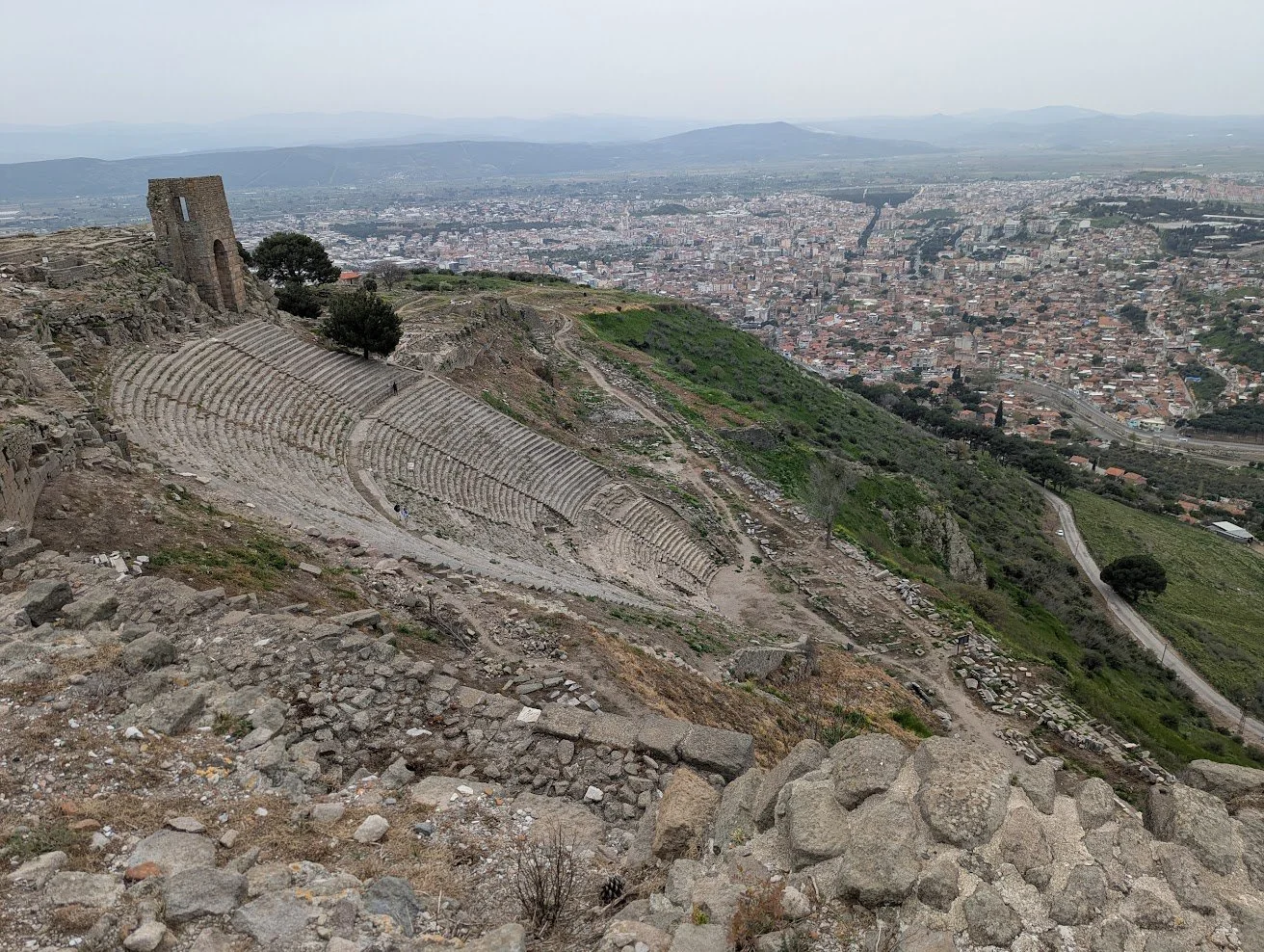
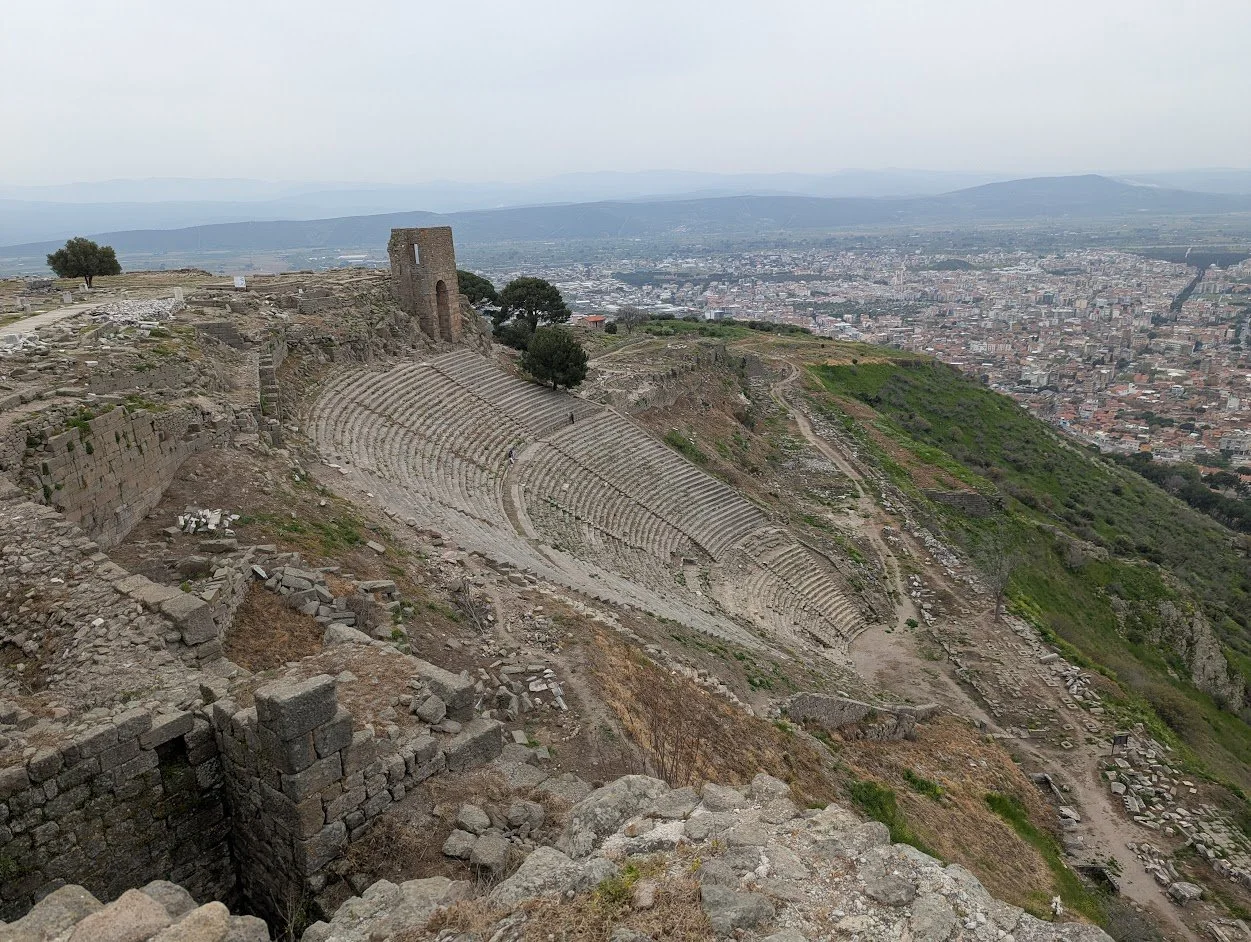
Theater of Pergamon- The theater at Pergamon is visible from miles away since it is cut right into the face of the mountain on the eastern side of the Acropolis. It is renowned for having the steepest angle of any theater in the world, which is almost 70 degrees. There are eighty rows of seats with the highest one located about 118 feet above the orchestra. A royal box made of marble was in the center of the theater. Built in the Hellenistic era during the third century BC by Attalid King Eumenis II, it was modified and expanded during the Roman era to accommodate up to 10,000 spectators. One can imagine that the sound generated by the crowds at events there would have reverberated for miles around. Today, most visitors view the theater from the top where the descent seems the most pronounced. Others venture about halfway down steps without railings like mountain goats to experience the sheer angle.
Temple of Dionysus- Just below the theater, there was a long terrace once covered by a portico that led to The Temple of Dionysus. This small temple dedicated to the Greek God of Wine and Drama served vital civic and cultural functions during festivals and celebrations. The temple once had four columns and was accessed by twenty-five steps. The altar in the temple and the steps has been preserved in decent condition but much of the mountainside terrace has deteriorated.
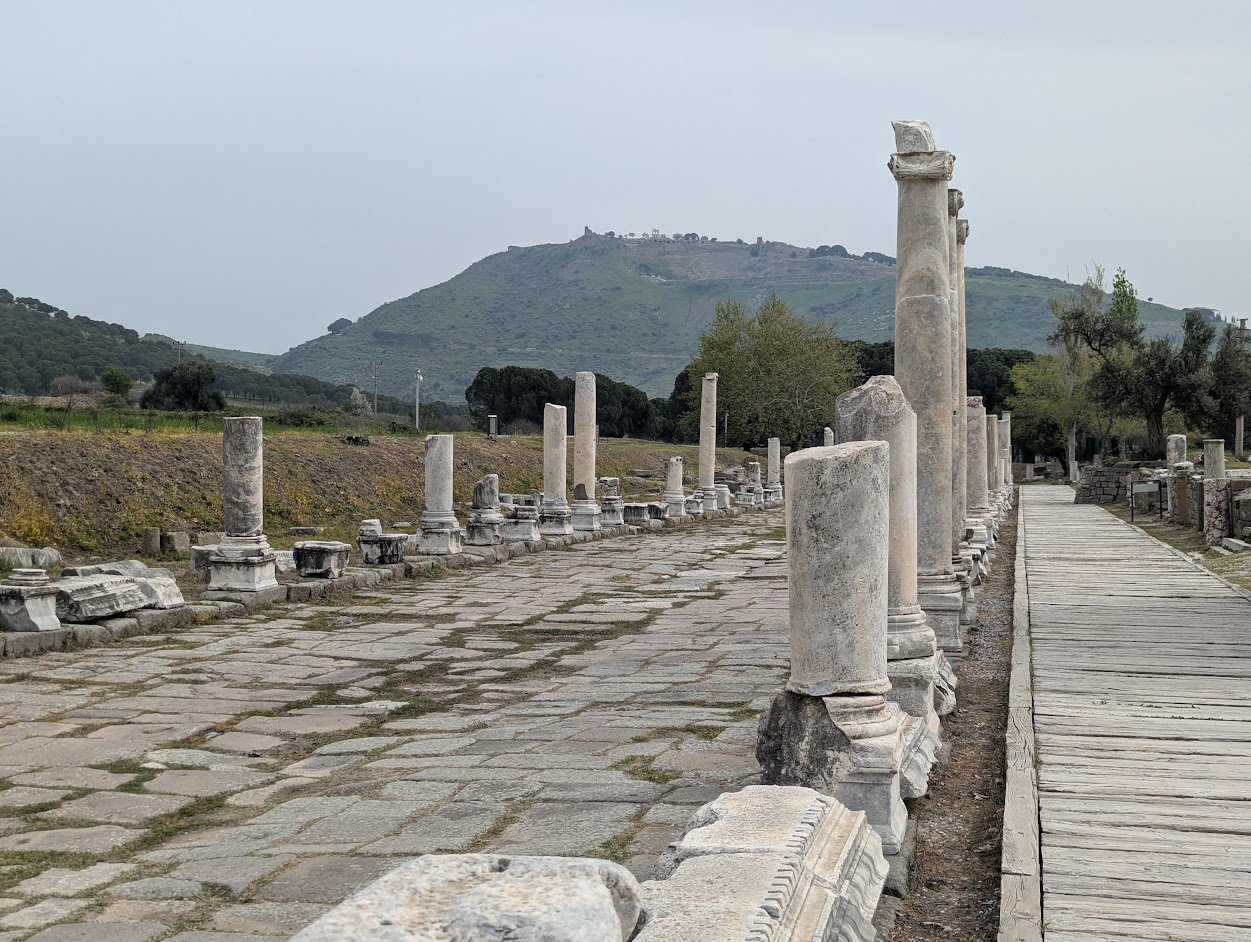
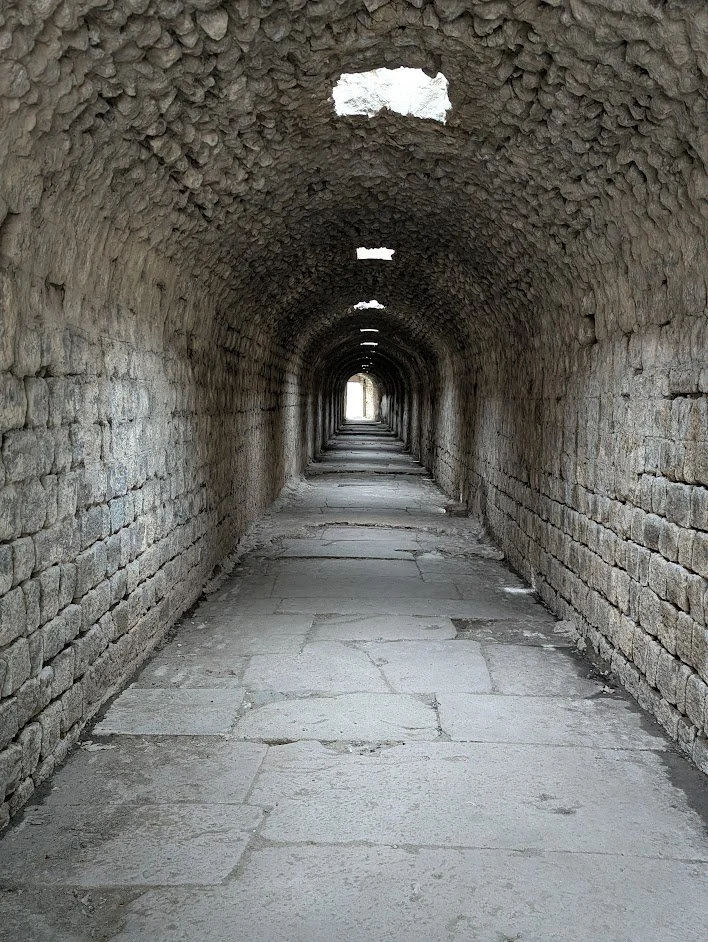
The Asklepion- Pergamon also had a large lower city beneath the mountain on the open plain which served as an important business attraction for centuries beginning in the 4th century BC until the 2nd century AD. The Asklepion was an ancient medical center that served as a healing sanctuary for generations of devoted followers of the cult of the Greek hero Asklepios as well as for later Roman patients. The doctors there included the famous Pergamon doctor Galen who collaborated with priests and assistants. They provided cures for patients who often stayed at the sanctuary for weeks or months. The therapies used there included a mixture of practical and supernatural measures such as sleep, immersion in healing waters, interviews with teams of examiners, examination of dreams, and application of vapors and ointments. The medical center was immense in size with a long entrance street full of shops, a library building, a theater, and treatment rooms. A long, dark underground tunnel was a prominent feature of the Asklepion and is believed to have been used by the priests who used the power of mystical suggestions to heal patients.
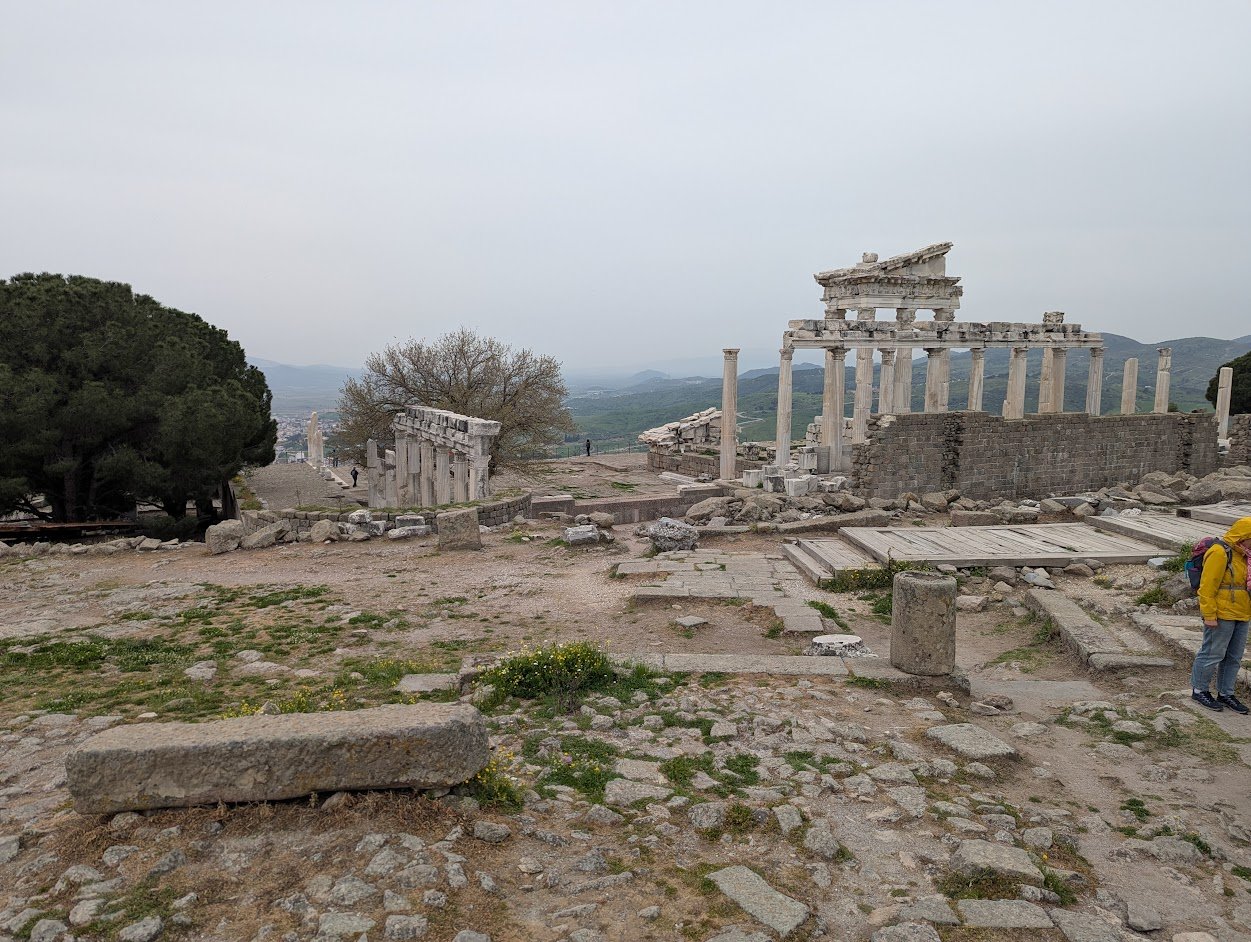
Library- Pergamon once had a large library with an estimated 200,000 scrolls of information that were collected by the rulers of the Attalid Dynasty during their 150 years of control of the city. Made of local parchment rather than papyrus, this library rivaled the renowned Library of ancient Alexandria in Ptolemy Egypt. In one of the ironies of history, Roman General Mark Anthony gifted most of the city’s collection to Cleopatra in 43 BC as a wedding gift to replace the damaged Alexandria library and the library never regained its previous reputation. Only a modest stone foundation remains of the library complex.
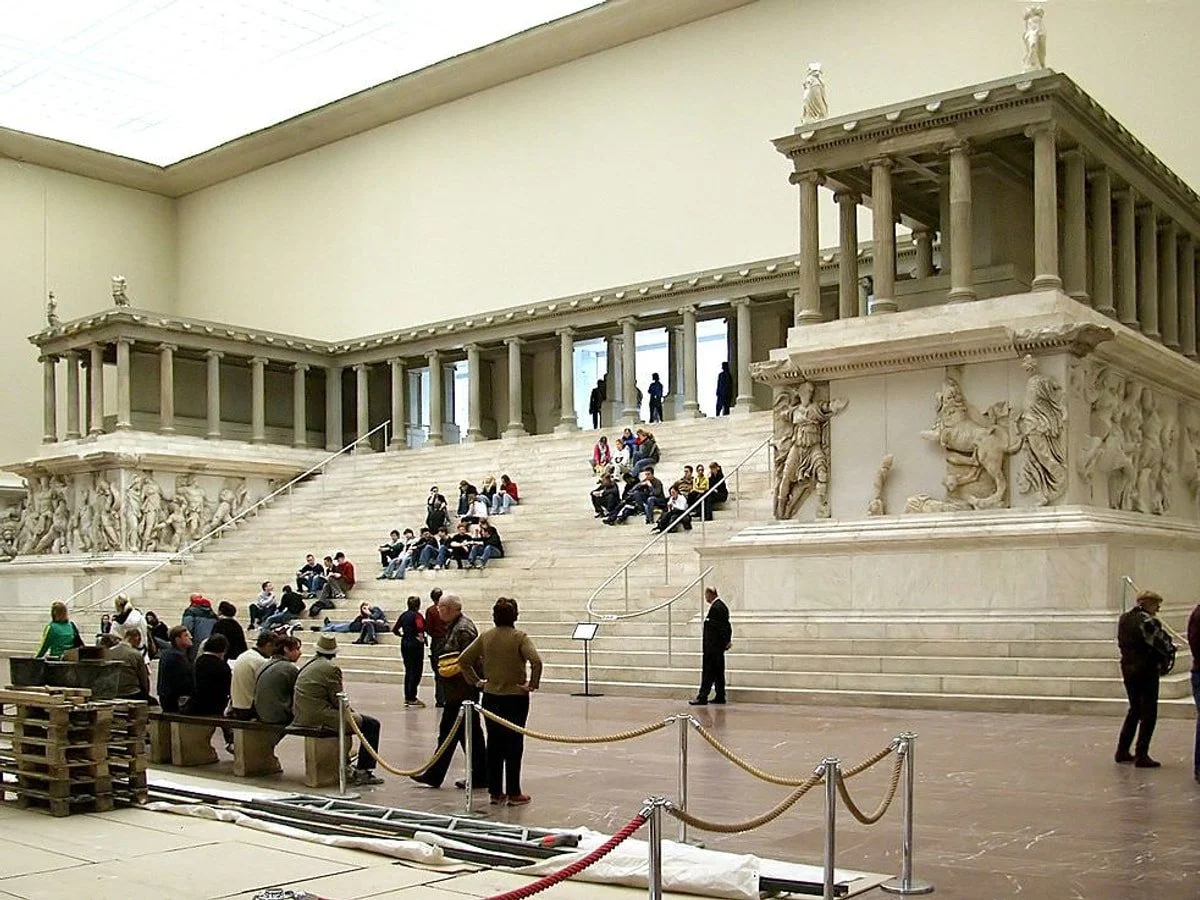
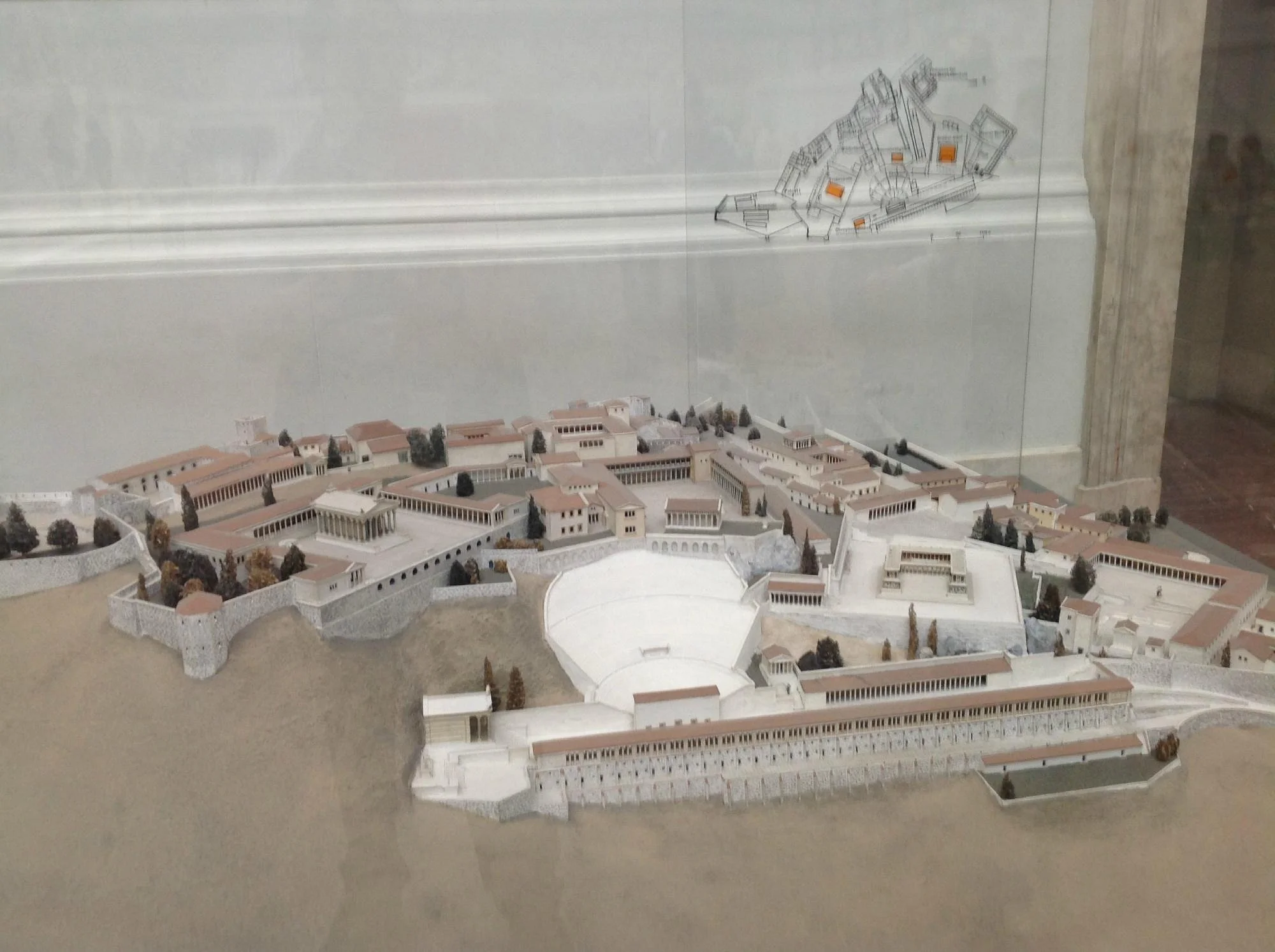
Altar of Zeus- The Altar of Zeus was built by King Eumenes II in 156 BC near the end of the Attalid dynasty. It was considered a masterpiece of Hellenistic architecture because of its wide staircase which led to a paved courtyard and a huge altar. Most notably, the entire base of the building contained three-dimensional friezes like the Parthenon. These reliefs showed mythological battles of the Gods, the victory of Pergamon over the enemy Galatians, and other celebratory scenes. The entire altar remained intact over the centuries, but it was removed by German archeologists and rebuilt at the Pergamon Museum in Berlin where it remains on display.
Interesting Facts – Although many places throughout Pergamon were dedicated to the worship of Greek gods and Roman Emperors, the site also became significant to early Christians because some worshipers were put to death there for their beliefs and the city was labeled in the New Testament as a place where “Satan has his throne.”
When to Go There - The best times to enjoy the archeological site of Pergamon are mid-March to May and mid-September to November. During these months, temperatures are comfortably in the 60s and 70s during the day. From June to August, however, the temperature can be over 90 degrees, and the surrounding land turns brown and dusty. Winter days can be crisp, and rain is more likely from December to February so check the forecasts if visiting during those months.
How to Get There – Pergamon is a two-and-a-half-hour drive from the popular cruise port of Kusadasi so it can be visited with a private driver if there is ample time for a trip. Ephesus Tour Turkey provides excellent service for visitors seeking a licensed guide and a driver to visit the site. The closest large airport in the region is in the large city of Izmir located about 90 minutes to the south with many international and domestic flights. This airport is served by over a dozen daily flights on Turkish Airlines from Istanbul.
Cost - Pergamon is usually open from 8:30 a.m. to 7 p.m. during the summer with an admission fee of 15 euros per person for the Acropolis and 13 euros per person for the Asklepion. The site closes earlier during the winter.