
Mysteries of the Minoans Uncovered at Knossos Palace– Crete, Greece
What is It – During the height of the Old Kingdom of Ancient Egypt, Europe was undeveloped with small Bronze Age settlements run by chiefdoms of prehistoric cultures. The first true European civilization to develop was the Minoan society based on the island of Crete in the Mediterranean. From 3000 BC to 2000 BC, this society evolved from Stone Age villages into a culture of increasing complexity and considerable power. The Minoans mastered metallurgy by using copper and tin to create tools and artifacts, established fleets of ships and maritime trade networks, developed an early writing system using Linear A script, and began to build elaborate palaces with dazzling frescoes and sprawling rooms. By 2000 BC, they were flourishing and building palace centers in places like Zakros, Malia, Phaistos and Knossos which served as administrative, commercial, and religious hubs for the island and its people.
The Palace at Knossos was the grandest of these palaces. It effectively served as the royal capital of the Minoan civilization for eight hundred years. The building complex consisted of multiple stories and contained an estimated one thousand rooms with grand staircases, advanced plumbing, light wells for illumination, and vivid wall paintings showing nature scenes, religious rituals, and local activities such as bull leaping. The huge palace and its throne room confirmed the importance of the site and provided the king with a powerful symbol of his secular and religious authority. Knossos was often regarded as a mysterious place by outsiders. The enormous palace at Knossos is believed to have created myths such as the story of the labyrinth, the Greek legend of King Minos, and the Minotaur who devoured humans and the Athenian hero who killed it.
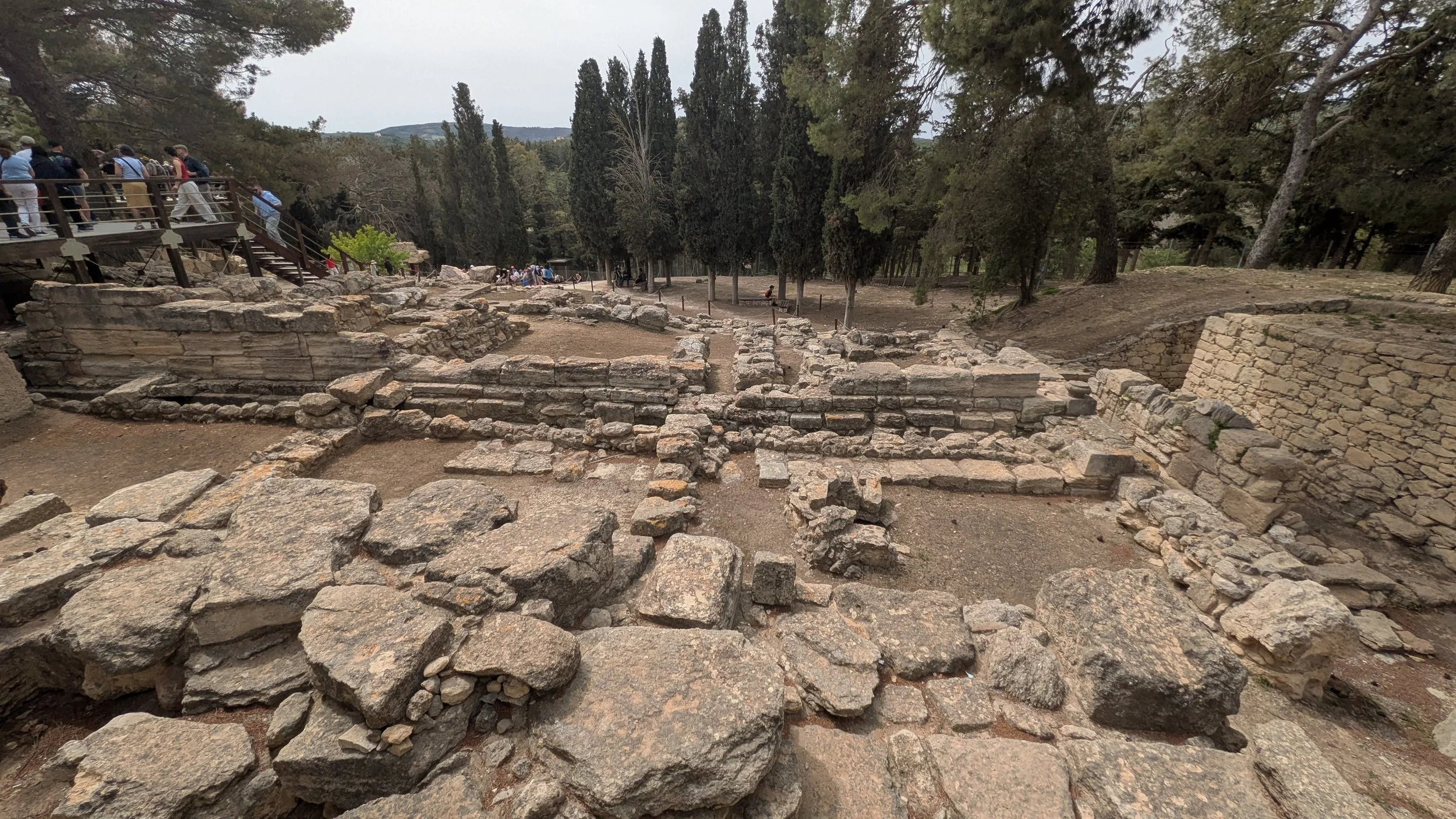
The original palace built in 2000 BC was destroyed in 1700 BC but rebuilt and expanded. It continued as the capital and center of Minoan life for another five hundred years until approximately 1200 BC. By that time, the Minoans had lost control over the island and Knossos was absorbed by the Mycenaean Greeks from the Greek mainland. Many historians used to believe that the catastrophic eruption of the island volcano at Santorini caused the final decline of the Minoans since it produced ash and tidal waves, and blocked light throughout the Mediterranean for months. However, that eruption is now dated as occurring around 1600 BC to 1550 BC so other factors such as earthquakes, agricultural disruption, political instability, and raids by rival powers are seen as the primary factors in Minoan decline. After the end of the Minoan civilization and Mycenaean rule, Crete became a collection of dozens of small and independent city states. While several cities including Knossos, Gorton and Littos sometimes vied for control of the island, Crete stayed neutral when the mainland powers such as Athens and Sparta fought wars. After 67 BC, however, Crete fell under the rule of the Roman Empire, the Byzantine Empire, the Venetian Republic and eventually the Ottoman Empire. There is some historical record of individual Romans visiting Knossos to view parts of the palace, but eventually the entire site became lost in history as did knowledge of the Minoans.
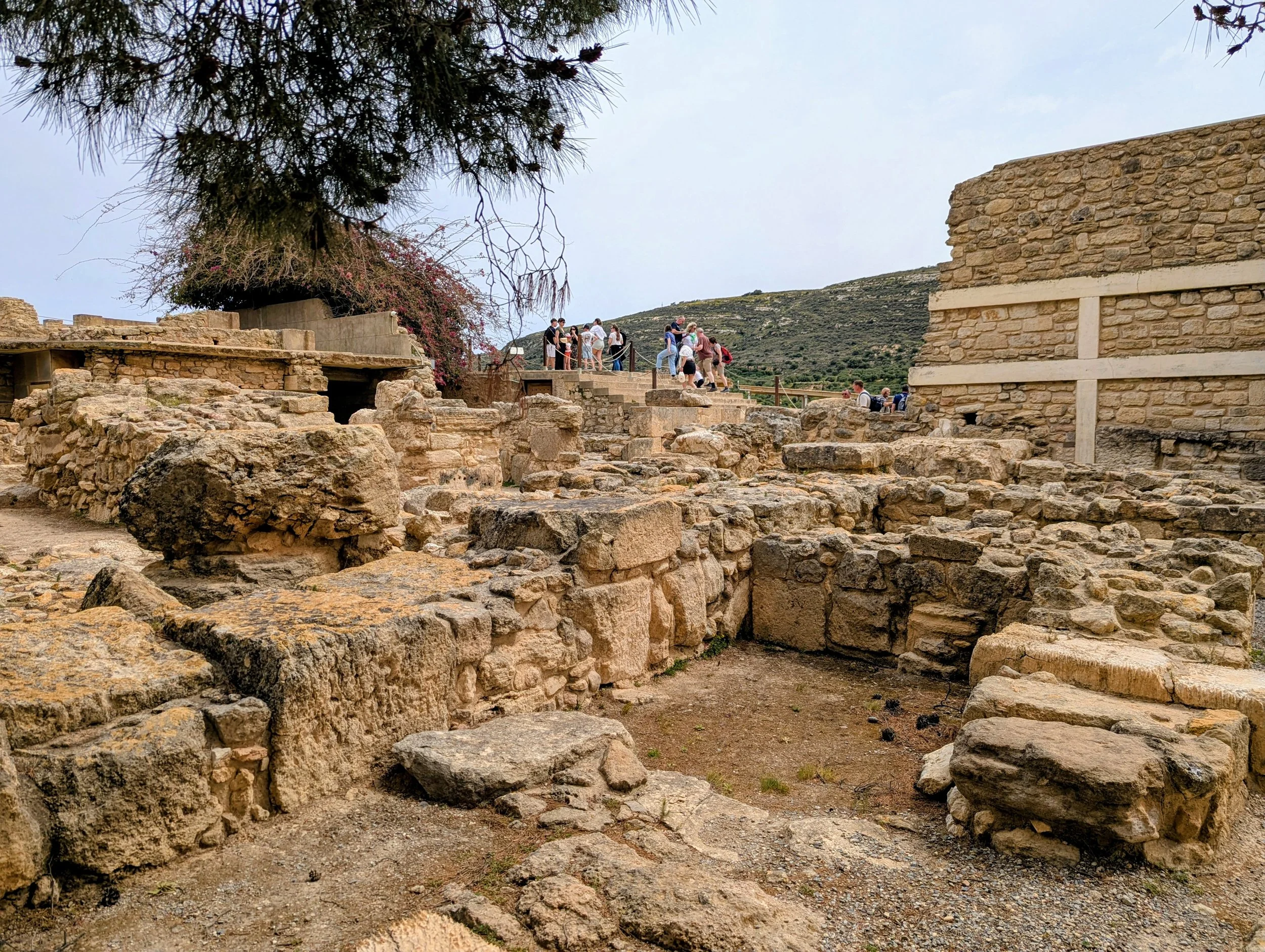
The ruins at Knossos were first identified and brought to the attention of international experts by a local businessman and archeologist named Minos Kalokairinos. He was the first person to recognize the site as the Palace of Knossos after purchasing a portion of the land and digging up buildings and artifacts there. Due to governmental instability, excavations were halted for almost thirty years and even prominent archeologists such as Schliemann were unable to work at the site. Finally, in 1900, a British archeologist named Sir Arthur Evans purchased the Kalokairinos site and a nearby orchard from their Turkish owner. He and his team from the British School at Athens unearthed substantial portions of the palace during the next thirty-one years with local assistance and identified the ruins as being part of the Minoan civilization. His use of concrete and cosmetic “restoration” of certain buildings and paintings remains controversial among archeologists.
Things to See There- The fact that the Palace at Knossos is now 3500 to 4000 years old makes it inevitable that its condition is more deteriorated than classic Greek, Roman and other ruins around the Mediterranean. Nevertheless, a three-hour tour of the site reveals interesting buildings, paintings, and reminders of this once magnificent civilization. The following items are most notable:
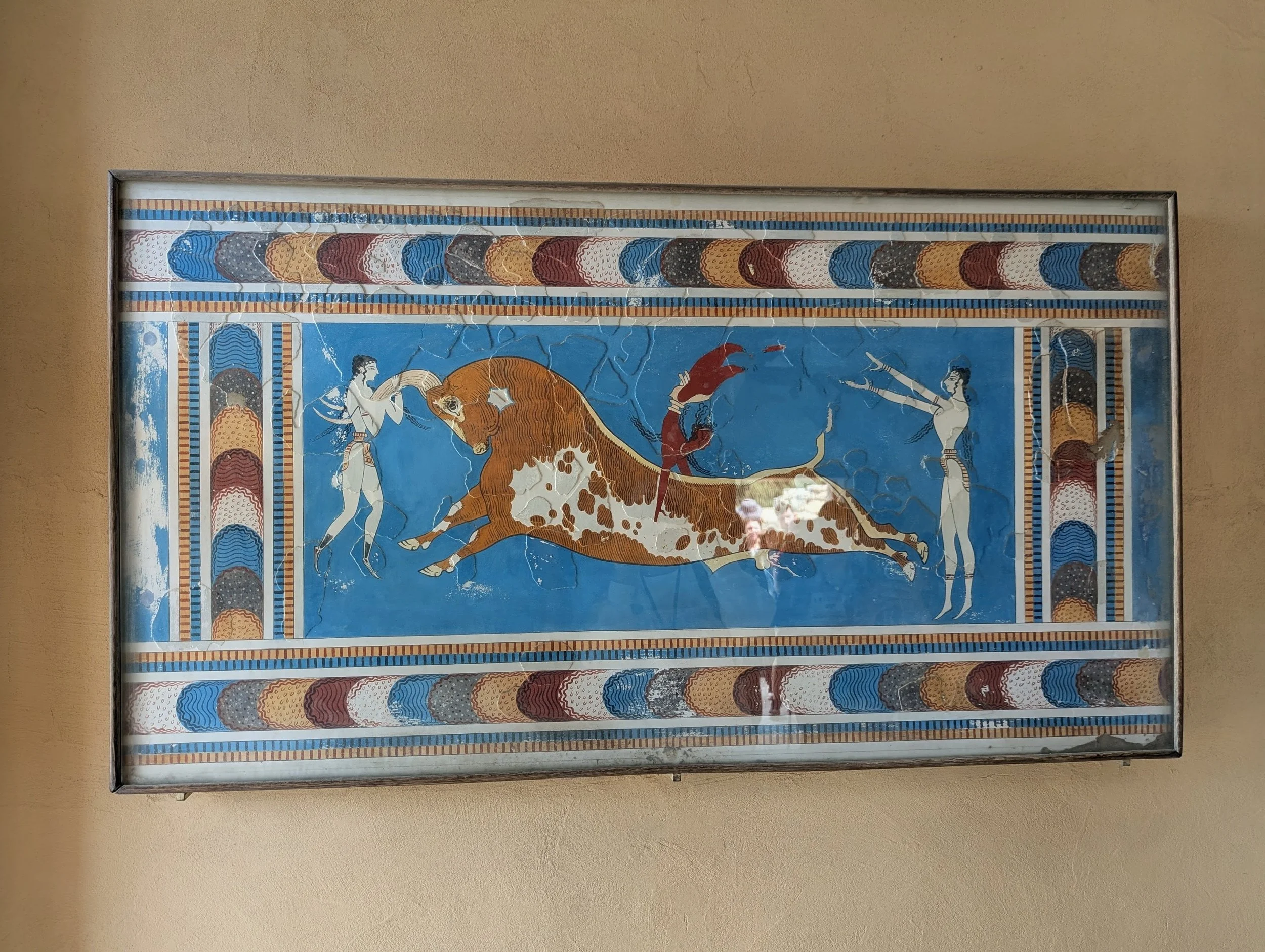
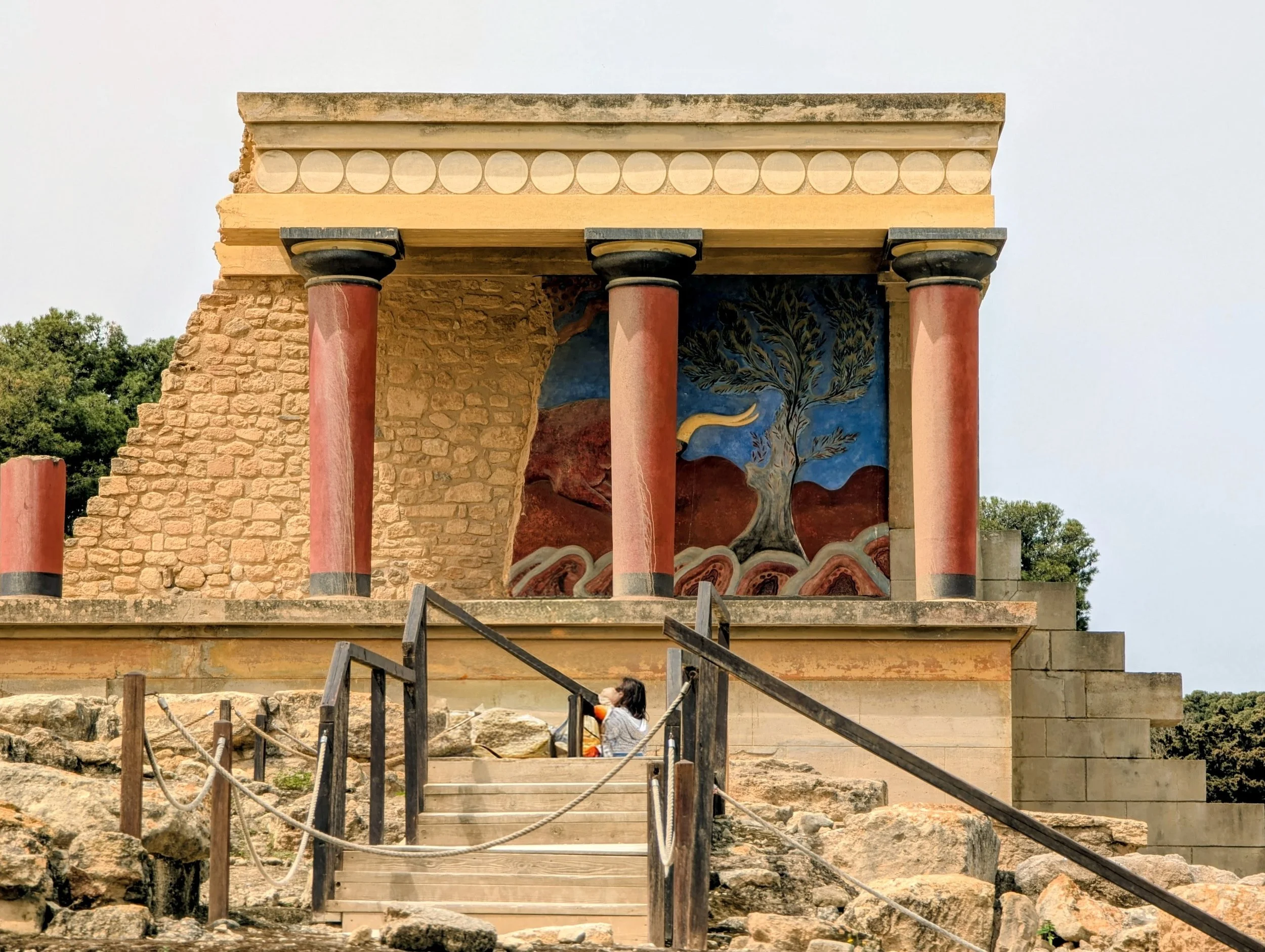
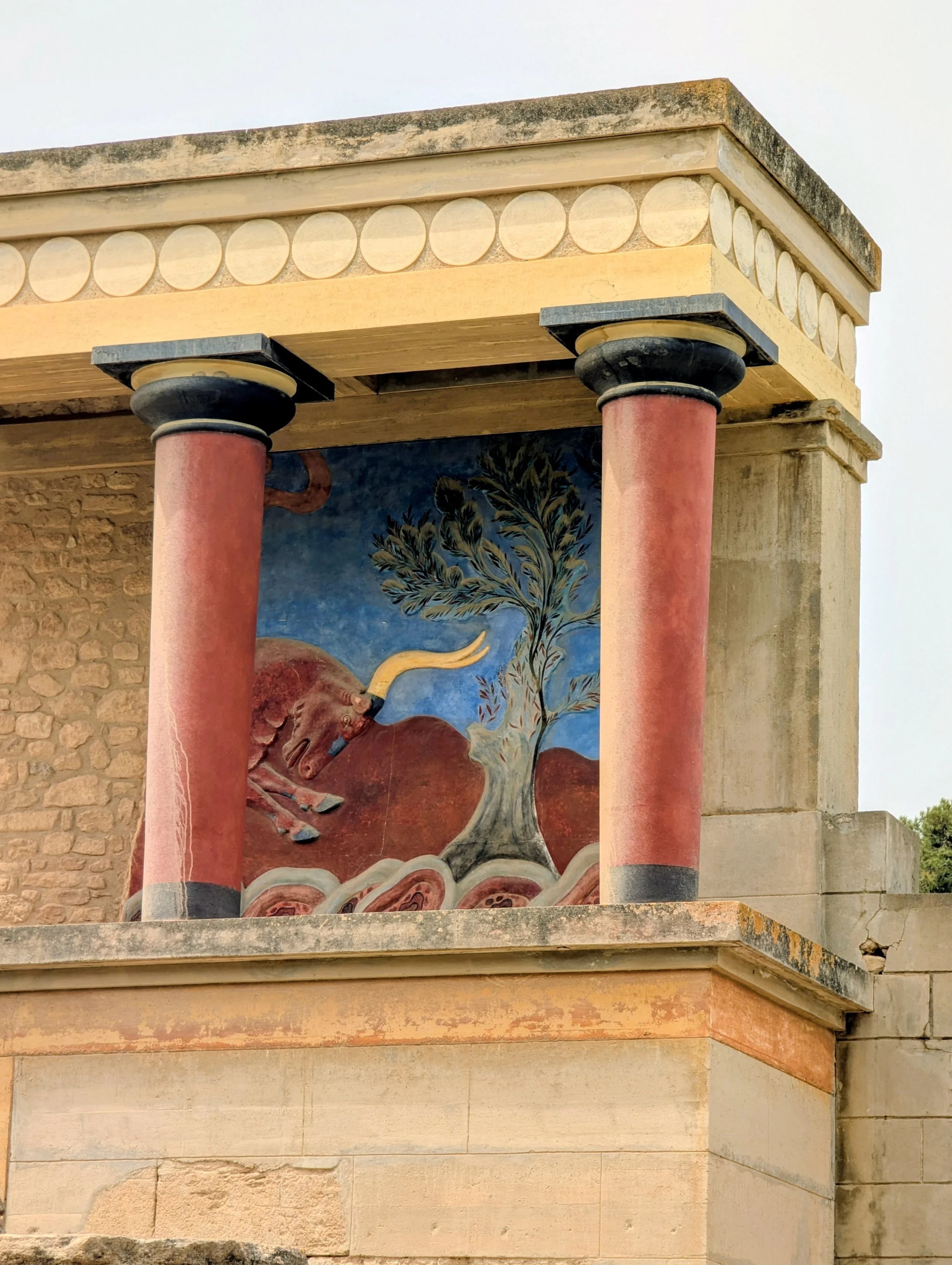
Bull Frescoes – The dramatic frescoes at Knossos always attract a lot of attention even though most of them are restored and not original. The vivid colors and intensity of the scenes depicted show the importance of artistic skill to Minoan society. One large structure with large columns and pillars built on the side of the palace facing the sea was named the Customs House by Evans because he interpreted it as being a place used for monitoring people and goods entering the palace. The fresco on the west side of this building shows a red bull with a surrounding landscape of olive trees. This fresco and another one showing three men leaping over a bull demonstrate the significance of the bull to Minoan religious life. These symbols further contributed to the myth of the Labyrinth at Knossos.
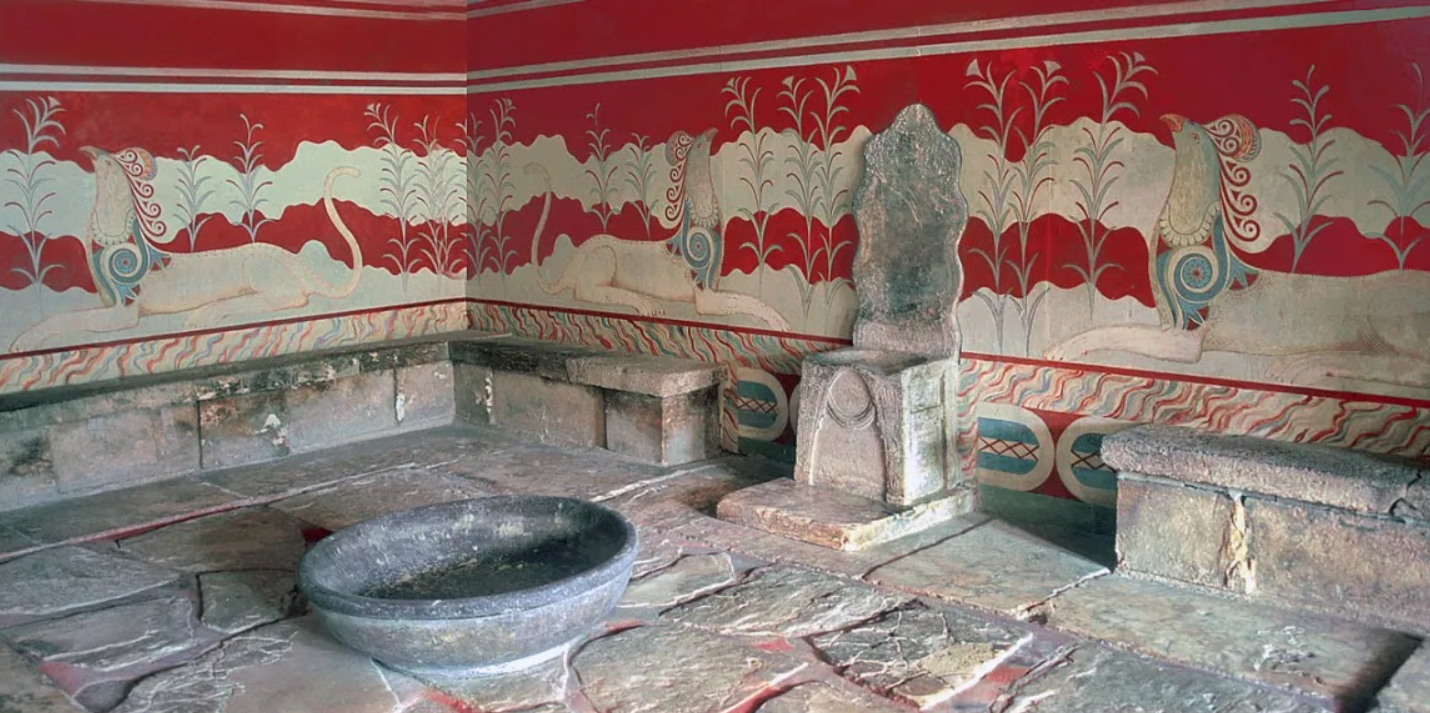
Throne Room- The throne room complex at Knossos is popular with visitors, but the small size of the building requires people to line up and wait to get in it. The four chambers or anterooms of the building include a room presumed to have been used to wash or purify visitors with water or olive oil before entering. The main throne room was found intact and contains an alabaster throne that was used by the ruler or priest. Other notable features of the room are the low stone benches along the walls and a stone basin. The bright red colored walls of the throne room contain a grand fresco showing two wingless griffins (a mystical figure with the body of a lion and the head and wings of an eagle) on each side of the throne serving as guards. Sir Arthur Evans pronounced the throne room as belonging to King Minos, but modern scholars suggest that the room may have been used by priestesses as a religious sanctuary.
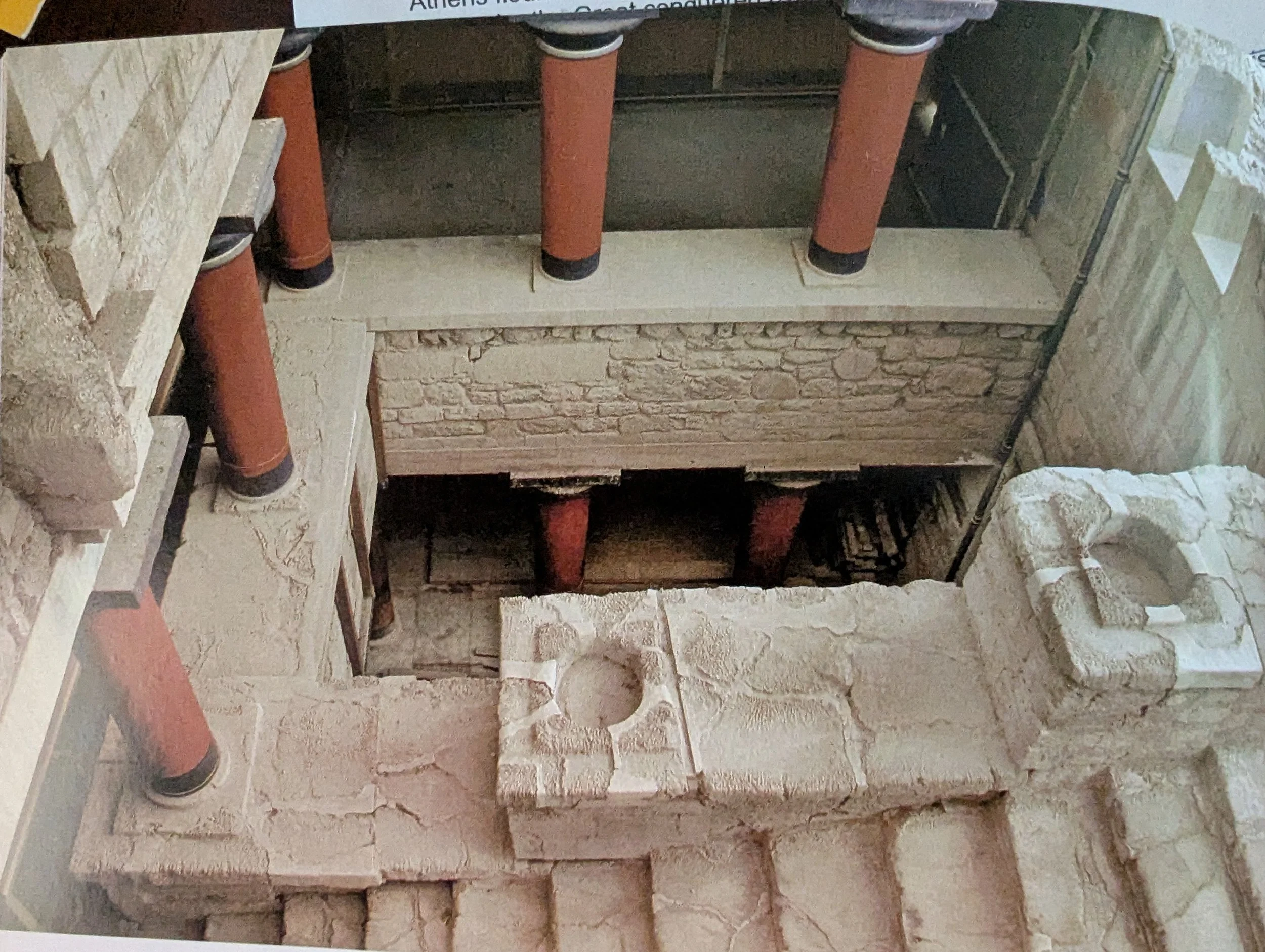
Grand Staircase- The grand staircase is in the east wing of the palace where the royal living quarters and workshops were located. It shows the advanced state of Minoan architecture which allowed them to construct multi-storied buildings and connect each story with naturally lighted staircases supported by columns.
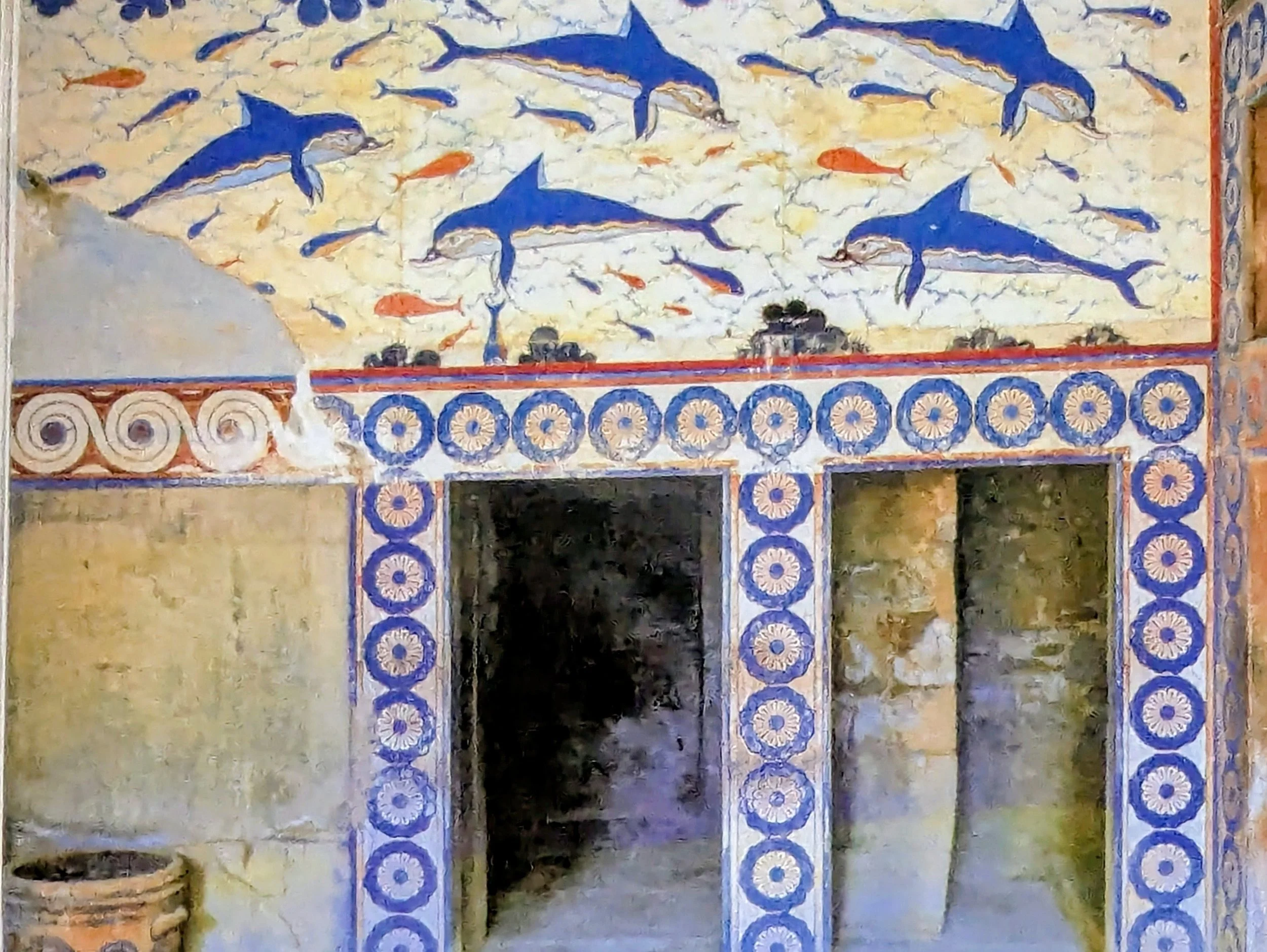
Queen’s Megaron- In classic Greek and Mycenaean culture, the central hall was known as a megaron. In the Knossos Palace, there is an area used as royal apartments which was restored by Sir Arthur Evans and given that name. This entrance is known for the Fresco of the Dolphins that adorns the wall and shows blue dolphins swimming with fish in the sea.
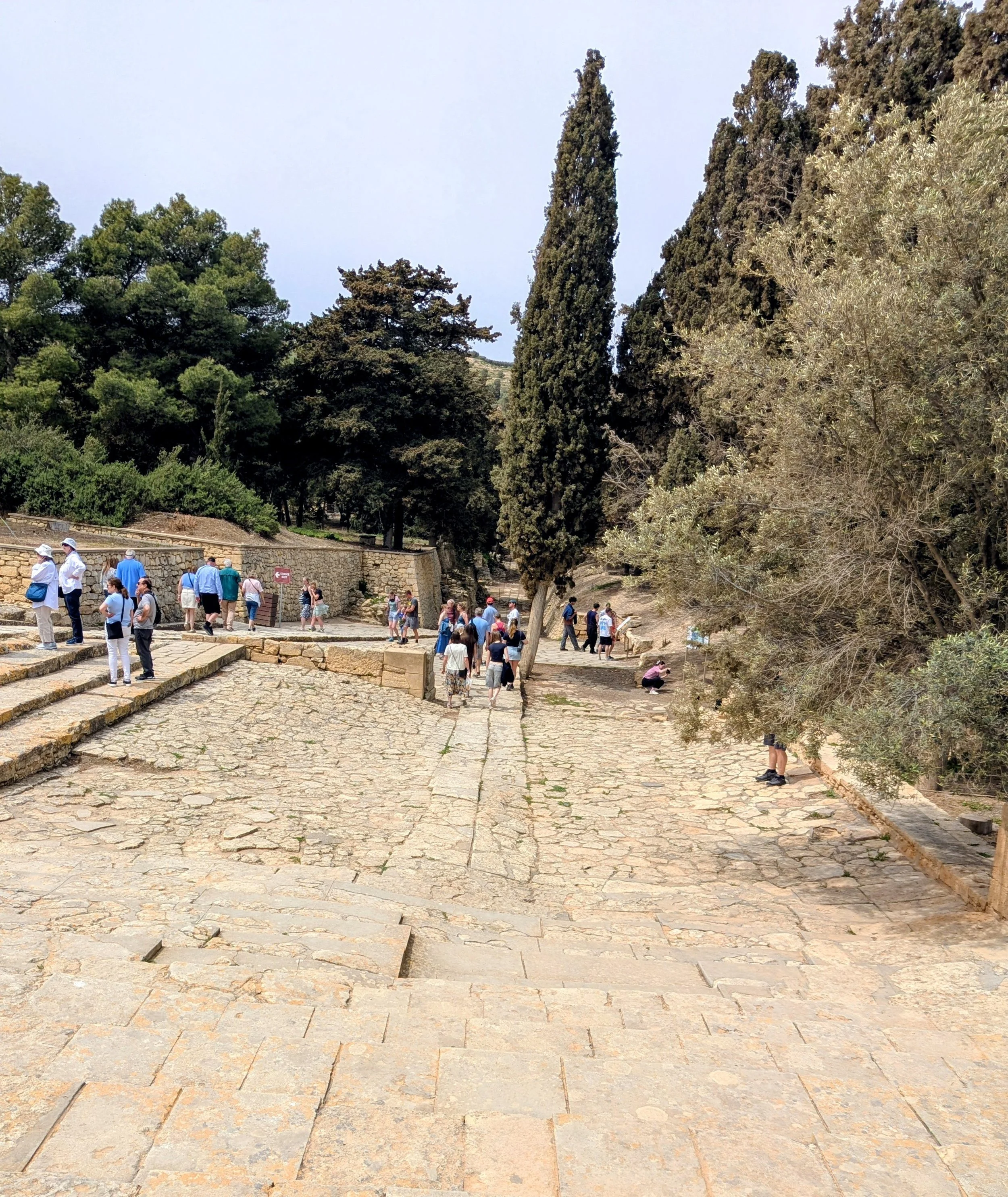
Royal Road- The royal road of Knossos has been described as the oldest road in Europe since its preserved sections connect the Palace with the settlements and monuments outside the central city.
Important Facts- The Palace of Knossos is a World Heritage Site recognized as being the most significant surviving monument of the ancient Minoan culture celebrated for its architectural ingenuity, historical status, and mythological importance. It receives one million visitors each year and is the second most popular tourist attraction in Greece.
When to Go There- The Palace is operated by the Greek Ministry of Culture and Sports and is open to the public daily from 8 am to 8 pm in the summer and 8:30 to 5 pm in the winter. Like most locations in the central Mediterranean, the shoulder seasons of late spring and fall are the best times of the year to visit the location and avoid the cruise ship crowds of the summer.
How to Get There- The Palace is located four miles away from the Heraklion International Airport. The airport is serviced by regional airlines such as easyJet, Jet2, Eurowings, and Aegean Airlines. There are direct flights from Athens and seasonal flights from major European cities. The Palace can be reached by car, taxi or bus from the airport or the town of Heraklion. There is an Archeological Museum in the town where objects, artifacts and some original wall painting frescoes from the Palace and other Minoan sites are on display. People who have arrived in other destinations on Crete can find day tours with guides in major cities such as Chania, Agios Nikolaos, and Rethymno.
Cost- Standard adult tickets for the Palace cost twenty euros and you can reserve tickets online in advance or select a skip-the-line guided tour, or audio tour.