
The Sacred Deer of Nara Park, Japan
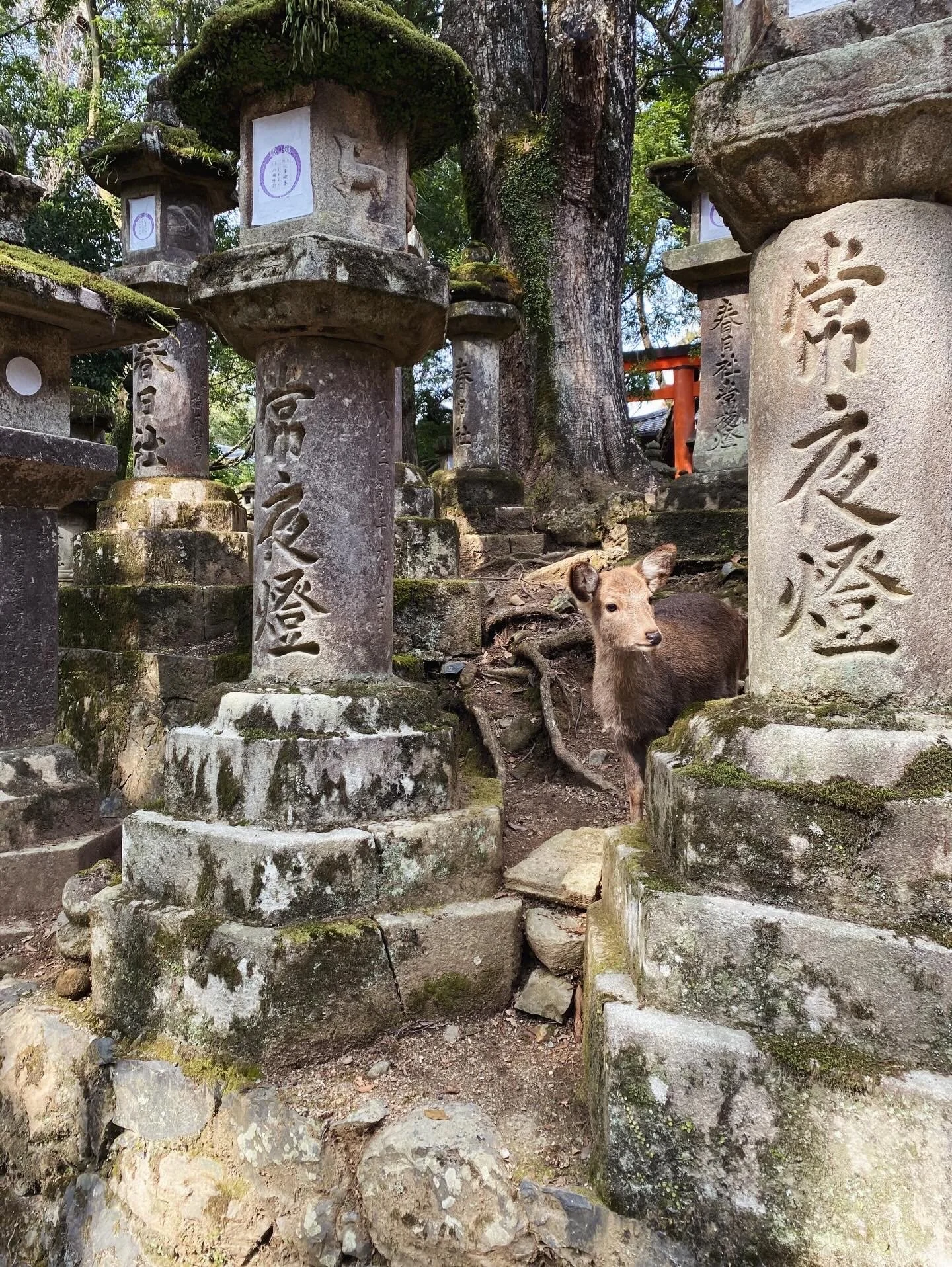
What is It- One of the most unique animal encounters for visitors to Japan to enjoy can be found in Nara Park, where hundreds of wild deer roam freely among the city’s parks, temple paths, and impressive shrines. Not far from Kyoto and Osaka, Nara Park is one of the most popular places in Japan to see sika deer up close. Sika deer are a small to medium sized species known for their dark brown coats and white spots. They are native to East Asia but small numbers were introduced to Maryland’s Eastern Shore in the early 1900s and remain there to this day.
The deer in Nara park aren’t enclosed in a zoo or viewed from behind a fence. They walk beside visitors begging for crackers, rest near stone lanterns, wander through temple grounds, and gather in open areas throughout the park. For travelers who enjoy wildlife and culture, Nara offers a combination of animal habitat, ancient history, and peaceful scenery all in one place.
Though Nara was once Japan’s first capital, for many visitors, the deer become the most unexpected and memorable part of the day.
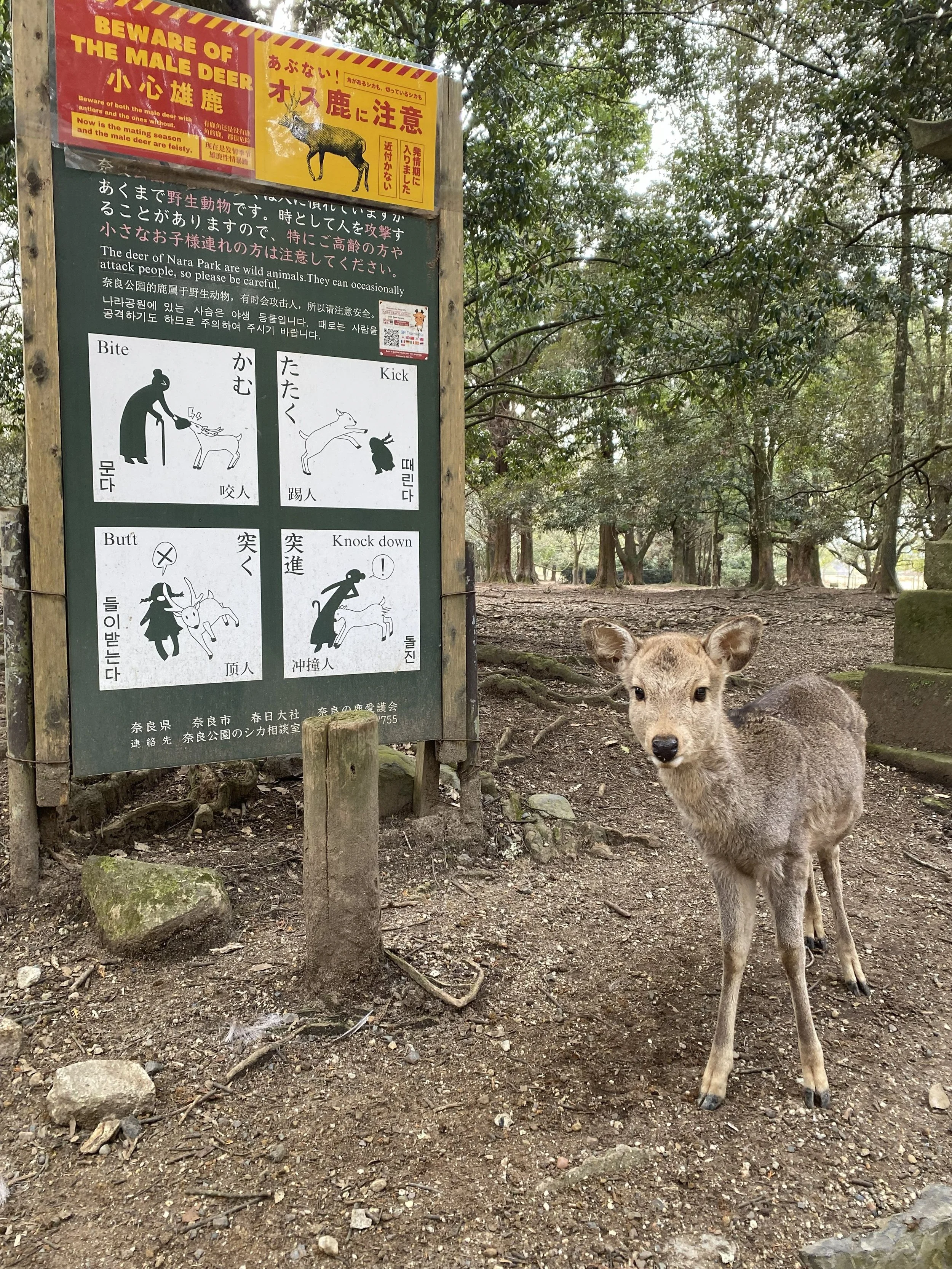
What You Will See There- The deer of Nara Park are wild, but they are comfortable with people and approach visitors looking for food. Special deer crackers are sold around the park and are the only food visitors should offer. Once the deer realize a visitor has crackers, either by sight or even by smelling them through a bag, they can become very interested very quickly.
Some deer are calm and gentle, while others are more determined. They may “bow” politely, nudge, follow, or crowd around visitors holding crackers. During my visit, my skirt and jacket got a few nibbles before I gave in and offered crackers. It’s charming, funny, and occasionally a little intimidating, especially when several deer decide they would all like a snack at the same time.
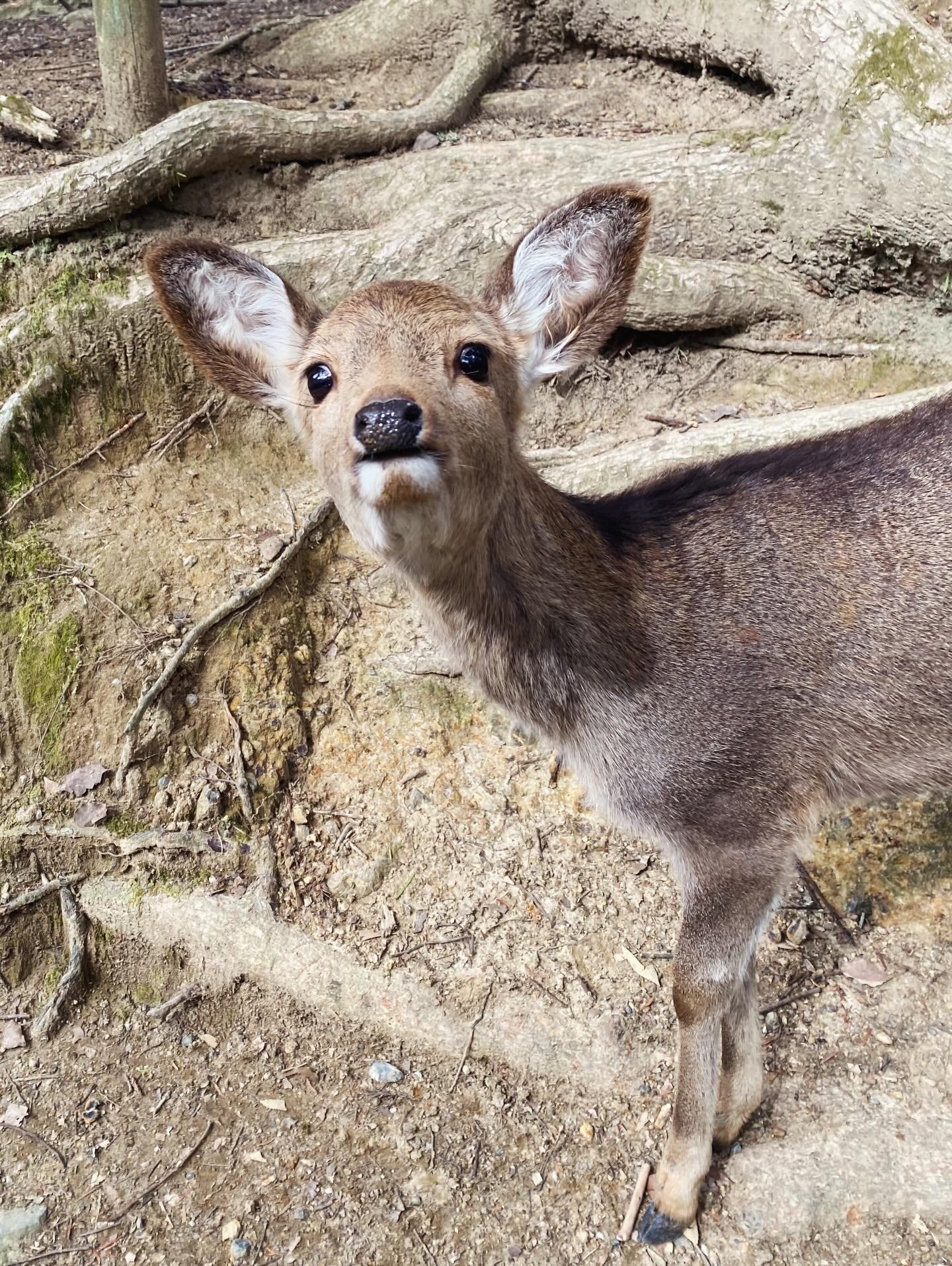
Other members of the deer population are more polite. Some deer rested quietly beneath trees, walked along the shrine paths, or gathered near the open areas where visitors were feeding them. The experience felt less like going to see an attraction and more like the deer were simply part of the fun.
Interesting Fact- The deer are closely tied to the spiritual history of Nara. According to local legend, one of the gods of Kasugataisha Shrine traveled to Nara on a white deer in the eighth century. Because of this connection, the deer came to be regarded as sacred messengers.
Today, the deer are treated as an important symbol of Nara. Visitors will see deer imagery throughout the city, from souvenirs and signs to transportation and decorations. Even the train into Nara is decorated with deer designs, which makes the experience feel like it begins before even arriving at the park.
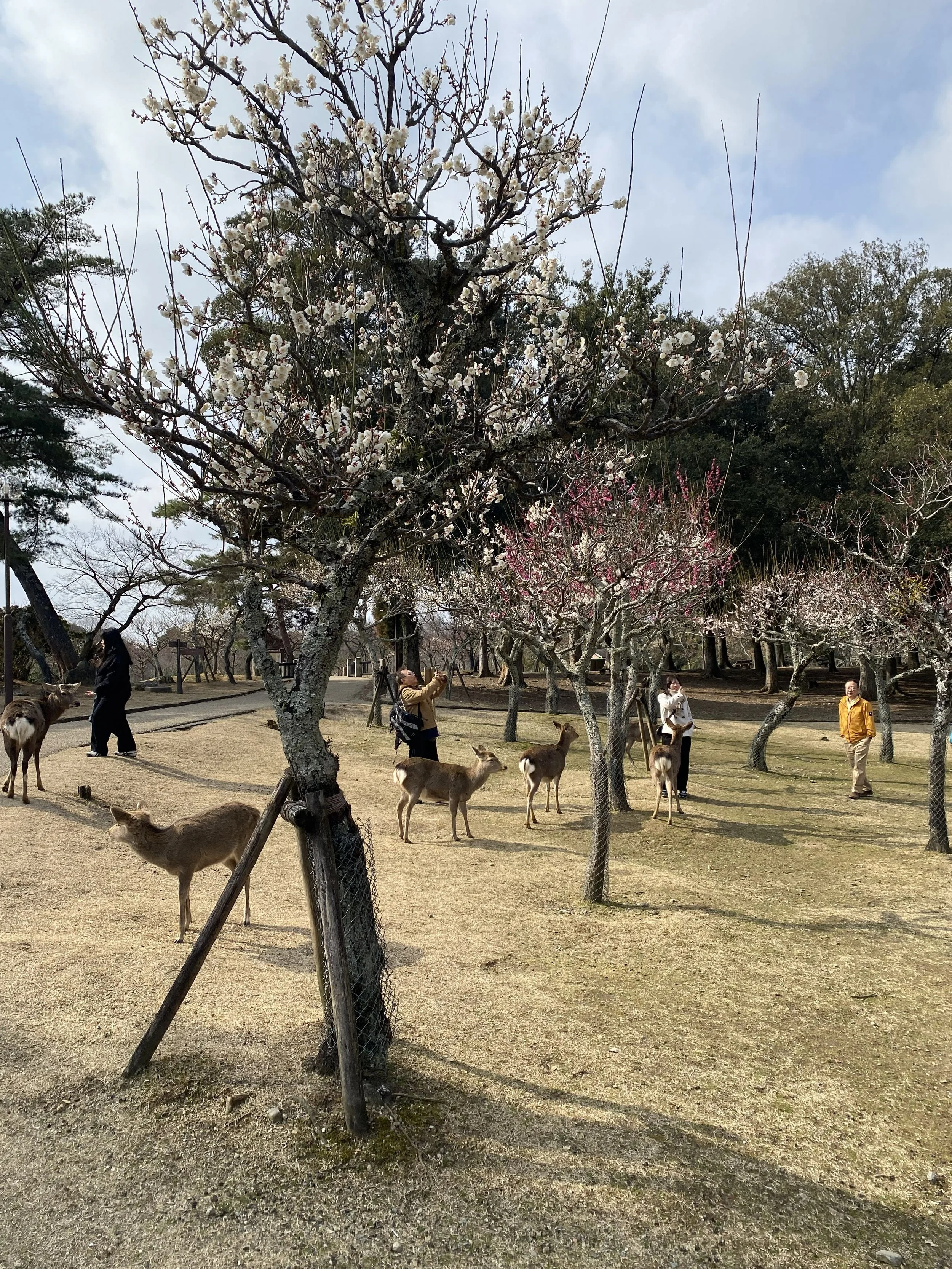
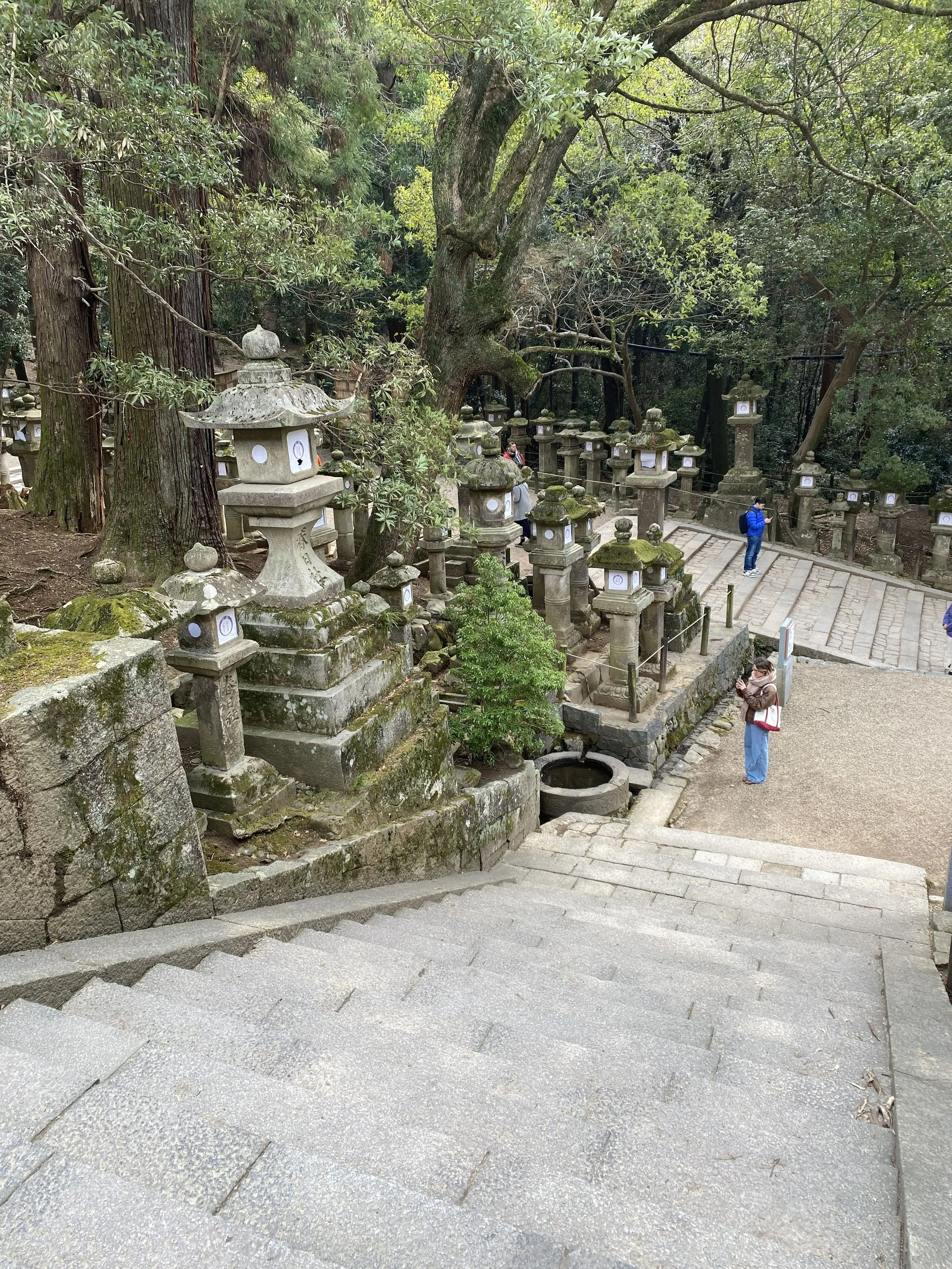
Where to Go- If visitors can restrain their excitement when first arriving at the park (unlike myself), it’s best to explore the areas farther from the entrances for the best experience. Some of the best places to encounter the deer are near the wooded approaches to Kasugataisha Shrine, where stone lanterns, moss, trees, and shrine paths create a beautiful scene.
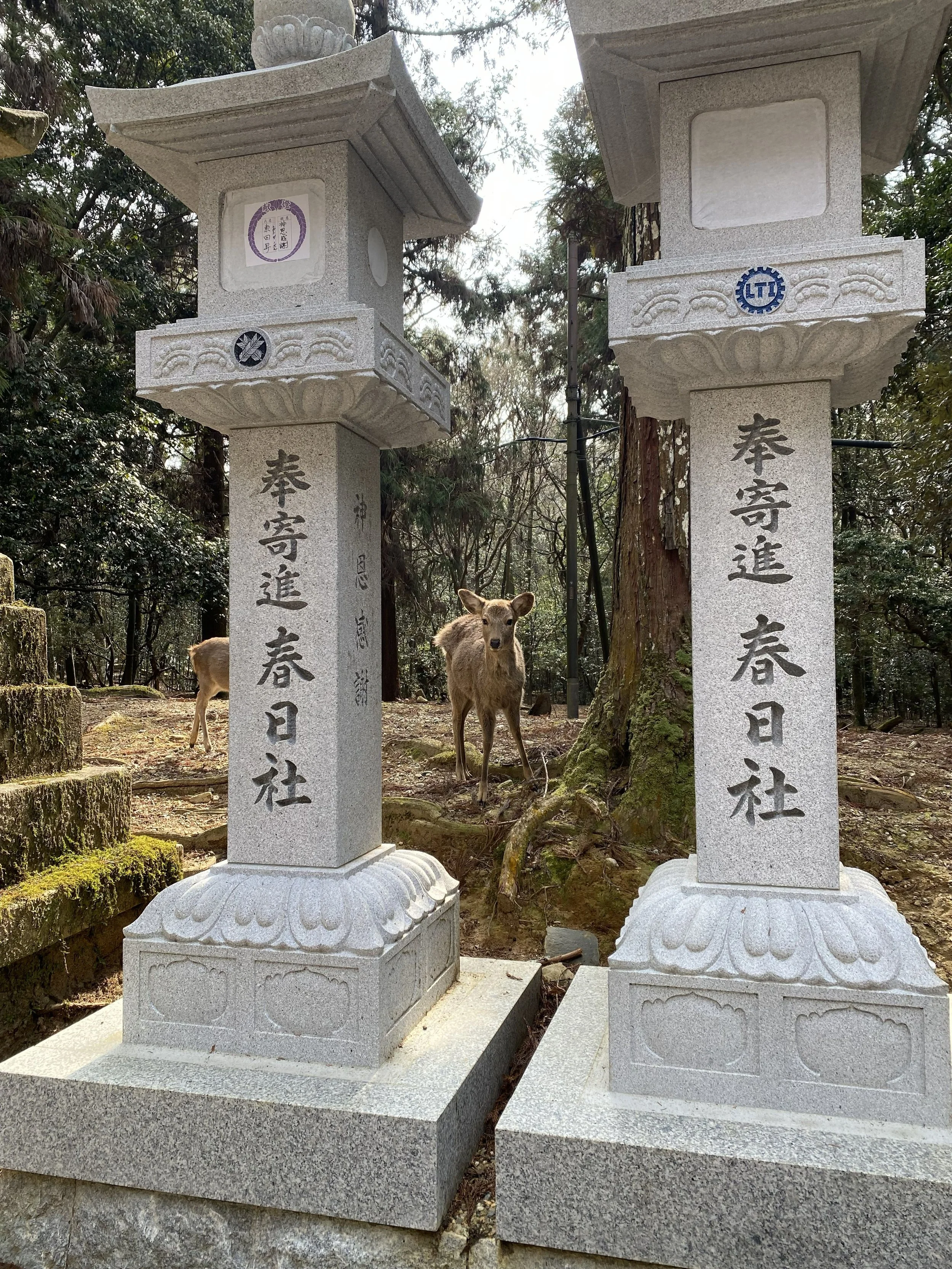
Nara Park is best explored on foot. The area has open lawns with cherry blossoms and plum blossom trees, shaded paths, temple grounds, wooded areas, and scenic corners where the deer can appear unexpectedly. Travelers should allow time to wander. The experience can be as simple or as full as visitors want it to be. Some people come mainly to feed and photograph the deer, while others combine the park with temples, shrines, museums, gardens, and shopping streets nearby.
When to Go- Nara Park can be visited year-round. February is especially beautiful when blossoms begin to appear, while autumn brings cooler weather and colorful leaves. Summer can be hot and humid, but the shaded areas around the park and shrine paths still make it possible to enjoy a visit. Winter is quieter and can give the park a peaceful feel.
Mornings are often a good time to visit because the park may be less crowded and the deer are active. Later in the day, the most popular areas can become busier with visitors, especially near the cracker vendors and major temple routes.
How to Get There- Nara is an easy day trip from Osaka. Many travelers arrive by train and walk toward the park from the station, although local buses are also available. Once in the park area, all of the major sights can be reached on foot.
Cost- There is no admission charge to walk through Nara Park and see the deer. The special deer crackers are sold by vendors around the park for a small fee. Some temples, shrines,
museums, and gardens in the area offer souvenirs such as wooden blocks to write wishes on and display for good fortune, or water-activated papers that help visitors read their fortune.
For travelers visiting Japan, Nara Park offers something different from Tokyo, Osaka, or Kyoto. It is a place where history and wildlife overlap in a way that feels unique to the world. The sight of deer bowing quietly along the peaceful paths for treats is the kind of travel memory that stays with you long after the visit ends.
This Article was written by Jessica Crist, the Production Director of The Traveling American, who also provided the photographs of these wonderful animals and their habitat.