
The Leaning Tower and Cathedral Square Memorialize the Glory Days of Pisa – Pisa, Italy
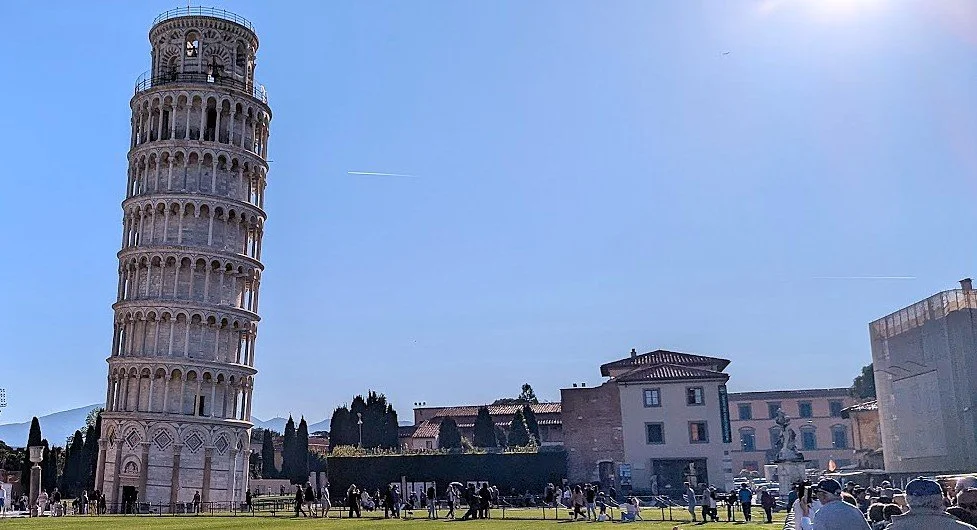
What is It? - During the late Middle Ages and prior to the Renaissance that inspired great works of architecture, culture, and reform throughout Europe, different kingdoms in the Mediterranean emerged as political and economic powers. On the Italian peninsula, the Maritime Republics of Genoa, Venice, Amalfi, and Pisa competed for dominance through commercial trade with the Orient and by maintaining large fleets of ships for military campaigns from the 11th to the 14th century.
Pisa is believed to have been settled by Greek colonists and some Etruscans lived there in ancient times. The city allied itself with the Roman Empire as Rome expanded throughout Italy. The sea has always been an important part of Pisa’s economic life, and the medieval city was once a vibrant port with a protected lagoon that used the Arno River to reach the sea. Ships based there sailed throughout the Tyrrhenian Sea and to ports around the Mediterranean. By the 12th century, Pisa had gained control of the island of Sardinia, ferried crusaders to the Holy Land during the First Crusade, and become the seat of an important church bishopric for the region.
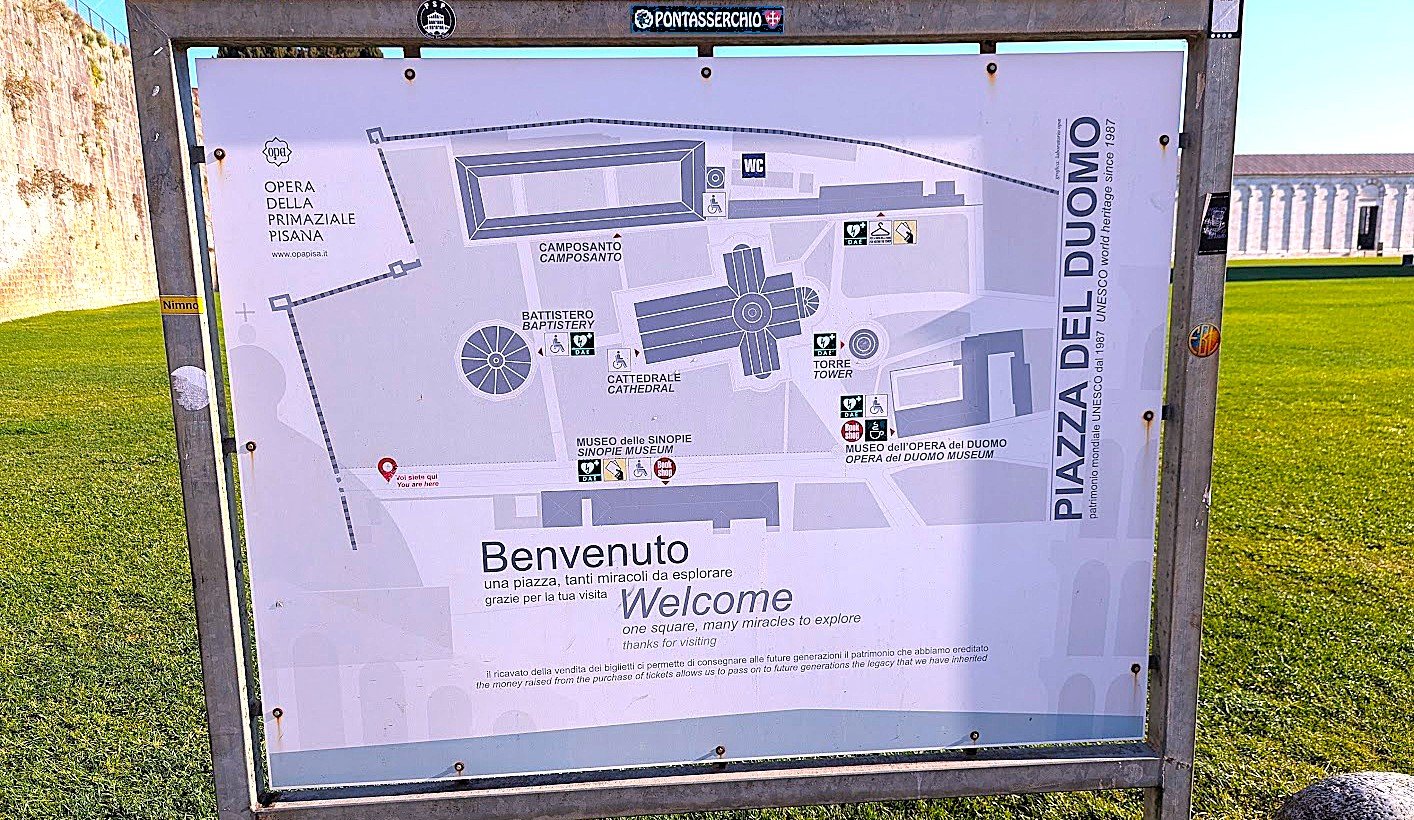
For several hundred years, Pisa had the resources and the influence to commission and eventually complete large building projects such as the development of the Campo Dei Miracoli or Cathedra Square. This large cluster of buildings and beautiful grounds took three hundred years to finish and was built in different phases. The resulting complex that has survived for almost a thousand years was an architectural achievement that ironically is now best known for the flawed Leaning Tower as much as the splendid cathedral, Baptistry, and a large rectangular structure known as the Camposanto. The city persevered with this project even though its port eventually silted in and its fleet was defeated by the Genoese in 1284. Eventually, Pisa lost control of Sardinia in the 1300s and was later forced to surrender the city after a siege to the rising military and political power of Florence in 1406. Notwithstanding these setbacks, the city remained intact and became a center for learning with the founding of University of Pisa in 1472 and managed to preserve its heritage structures. Today, the World Heritage Site at The Leaning Tower of Pisa attracts more than five million visitors annually.
What You Will See There – The large complex at Campo Dei Miracoli contains four important buildings but clearly the Leaning Tower is the main attraction because of its uniqueness. The four buildings include:
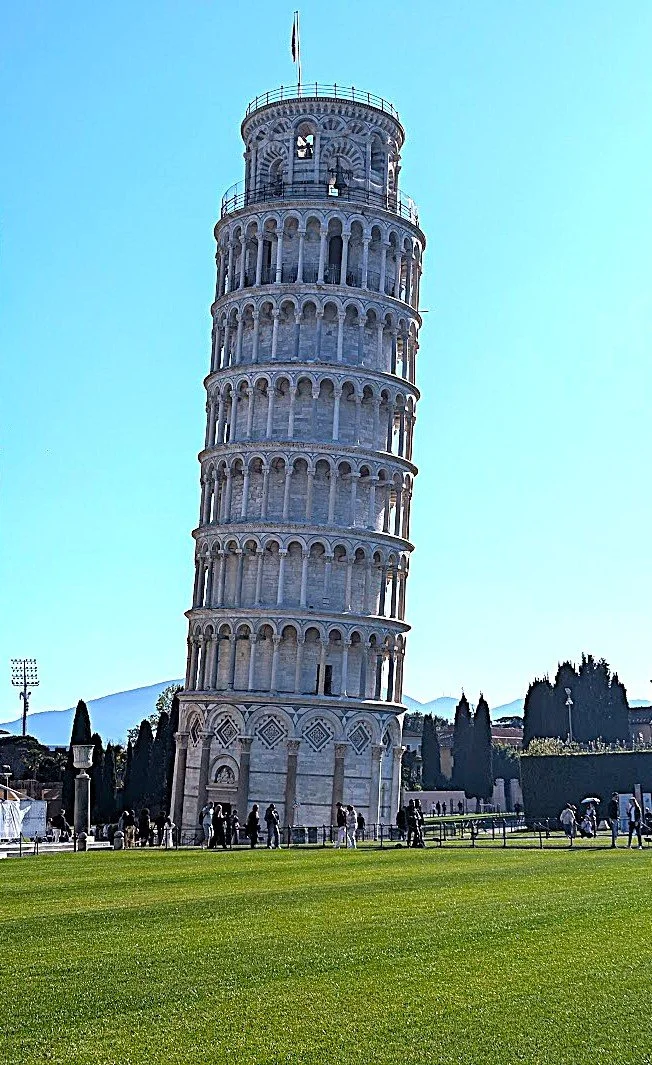
The Leaning Tower – The Leaning Tower is a bell tower that is cylindrical in shape. The north side of the Tower rises 179 feet to the north side and 177 feet from the south side. There are three parts to the Tower. There is a firm marble base with columns all around it, then six levels of blind arches stacked up like layers on a cake, and finally a bell tower with seven bells hanging in different columns. Construction on the Tower by architect Bonanno started in 1173 and as soon as the first three floors were completed, the south side of the Tower began sinking because of the soft soil. Construction ceased for almost one hundred years before being resumed a century later. Completed in 1350, visitors came by to see the Tower for centuries and often climbed its 290 steps to the top on a cylindrical staircase to enjoy a panoramic view of the city. The Tower attracted Galileo in the 16th century to conduct his gravity experiments there. The proximity of Pisa to Florence and Rome made it a popular stop for pilgrims or wealthy Europeans taking a Grand Tour of the sites in Italy.
At various times, concerns have been raised as to whether the Tower could collapse so efforts to stabilize the structure by soil extraction and placing counterweights under the north side have frequently taken place over the years, along with restoration of the marble surfaces. The last major repair effort was completed in 2008. A limited number of booked visitors can climb the Tower each day with no more than forty-five people allowed to be in the Tower at one time.
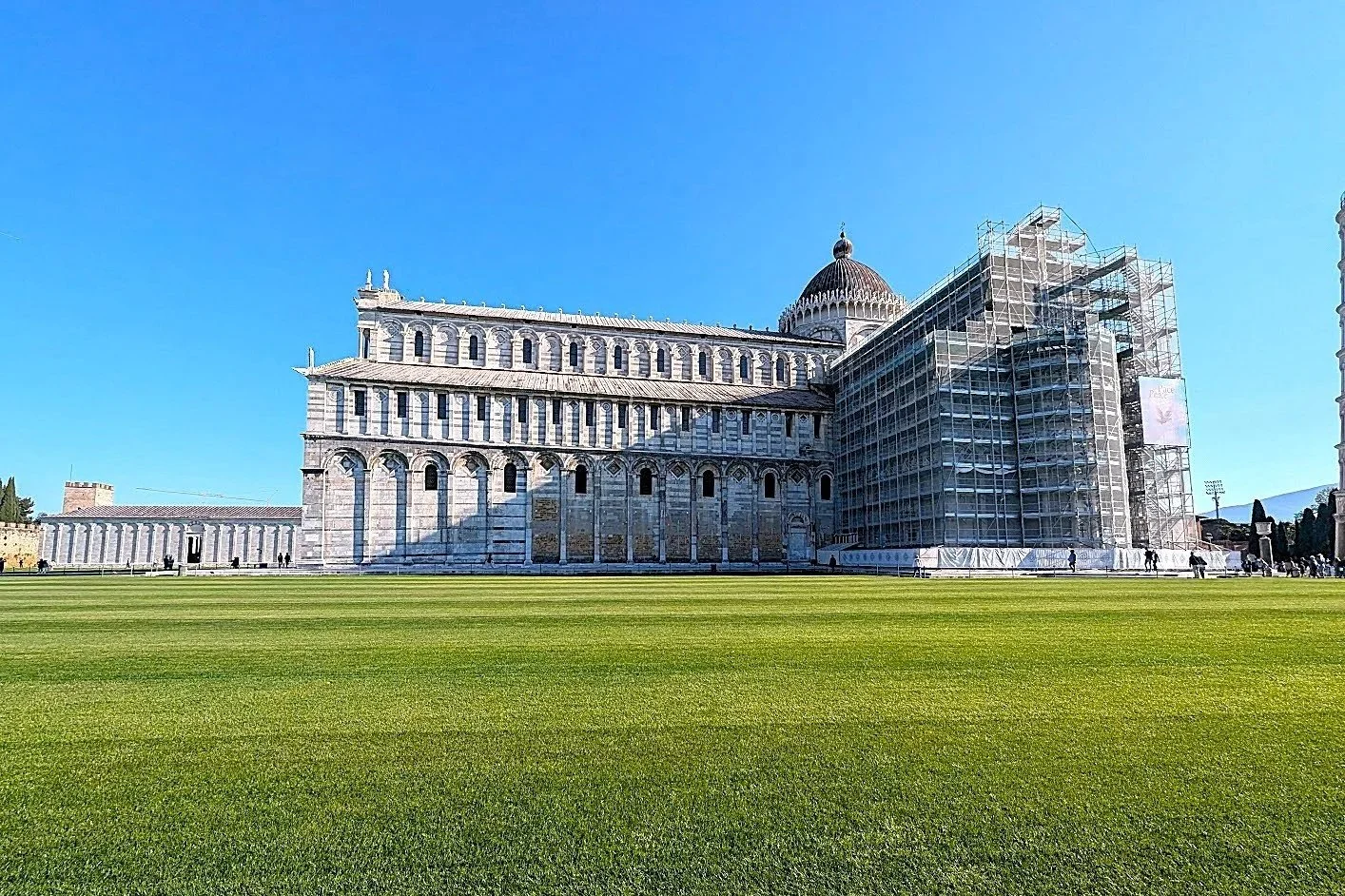
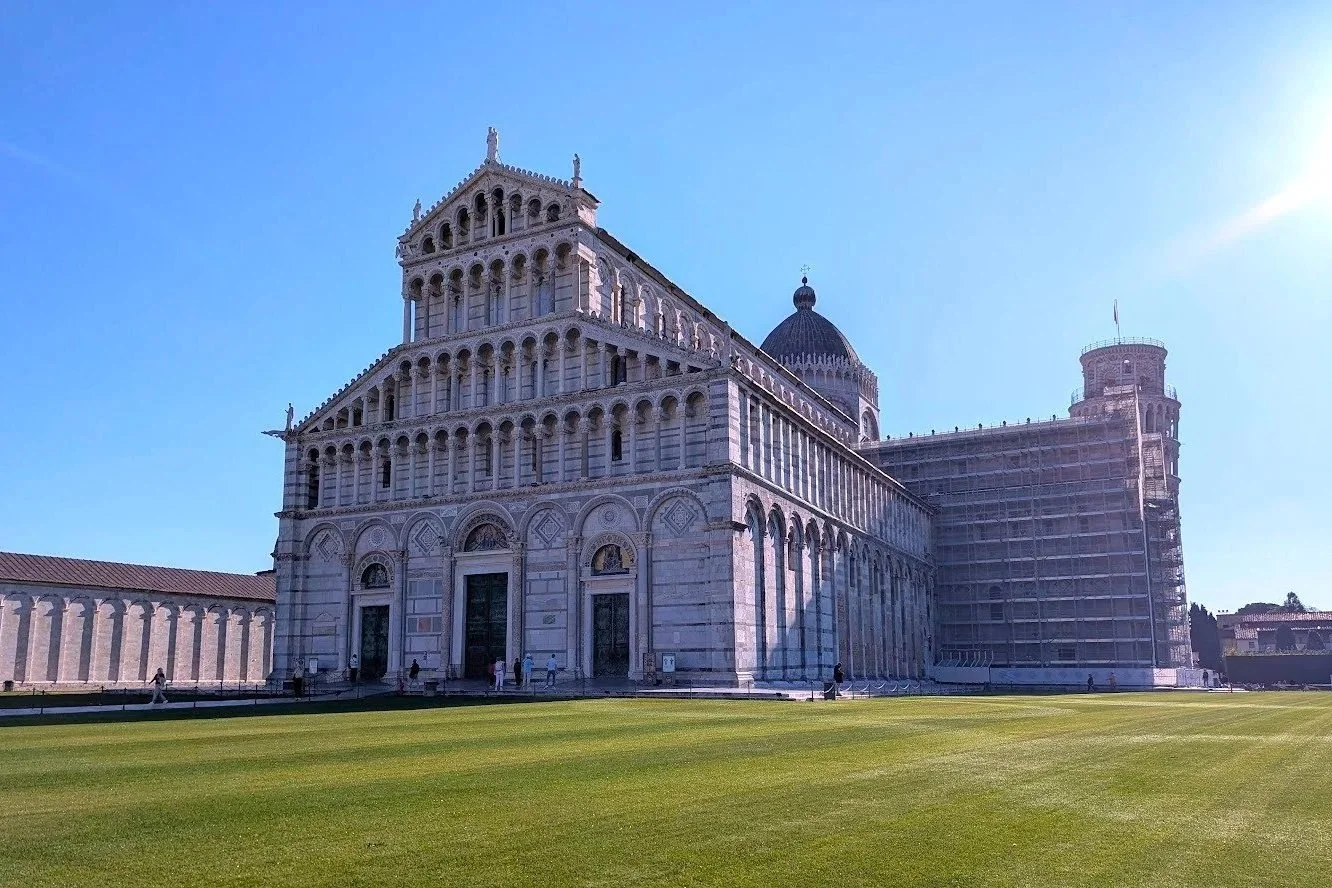
The Cathedral- Pisa’s Cathedral is a majestic building that does not get the attention it deserves because of the notoriety of the Leaning Tower. Construction was begun in 1064 under the direction of the architect Buscheto but important extensions and the impressive face were completed by other architects in the early 12th century. Numerous designs found in Tuscany and Sardinia reflect the design of the Pisa Cathedral such as the use of colored marbles on the facing, the decorative columns and arches on the exterior of the building, and the elliptical dome which was added to the cathedral in 1380. Not everything in the Cathedral was unique, however, since other religious buildings such as The Mezquita Mosque in Cordoba, Spain and Byzantine churches in Constantinople may have influenced features such as the candy-striped arches and mosaics of the interior sections. Another distinctive feature of the Cathedral that brought the story of the Bible to life for illiterate parishioners was the bronze door panels of the central entrance which depicted the life of Christ and the life of the Virgin Mary in three-dimension reliefs.
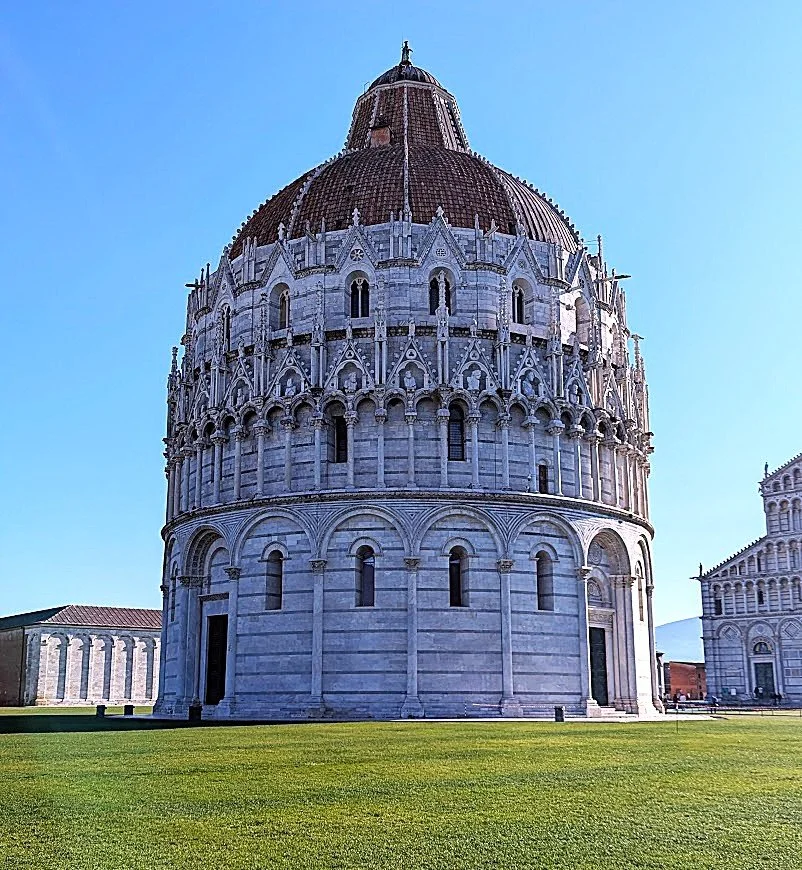
The Bapistry- In the late Middel Ages, a building adjacent to a cathedral known as a bapistry was built as a symbol of Pisa’s economic and religious power. The purpose was to establish a separate space to administer the sacrament of baptism to new members of the church. While some baptisms were mass events where large groups would be baptized at once on important theological days, it was also used for the baptism of individuals. The Bapistry building at Pisa is an impressive circular building with a domed roof, arches on the lower portion, and columns around the middle of the structure. The main portal was adorned with reliefs showing scenes from the life of John the Baptist. Inside the structure is a hexagonal baptismal font and a pulpit made of fine marble. The interior is renowned for its acoustic qualities as well.
The Camposanto - The Camposanto is a large rectangular building that runs for 426 feet along one side of the Campo Dei Miracoli, Constructed in the 13th century and completed around 1358, it contains an attractive interior grass courtyard of grass surrounded by covered arches. There are a variety of frescoes in the interior corridors that were painted after the Black Death plague of the 14th century along with sarcophagi and sculptures.
How to Get Here – Pisa is centrally located only about seven miles from the Ligurian Sea coastline. It is a convenient place to visit for people spending time at beachfront locations such as Viareggio or for people who also plan to visit Florence located about seventy-five miles to the east. There are numerous companies in Florence, Rome and Lucca which offer tours to Pisa along with cruise ships stopping at the ports of La Spezia and Livorno. Pisa has an international airport with service from fifty-six cities in Europe provided mostly by regional budget carriers like Ryanair and easyJet, but British Airways and Lufthansa also have flights there.
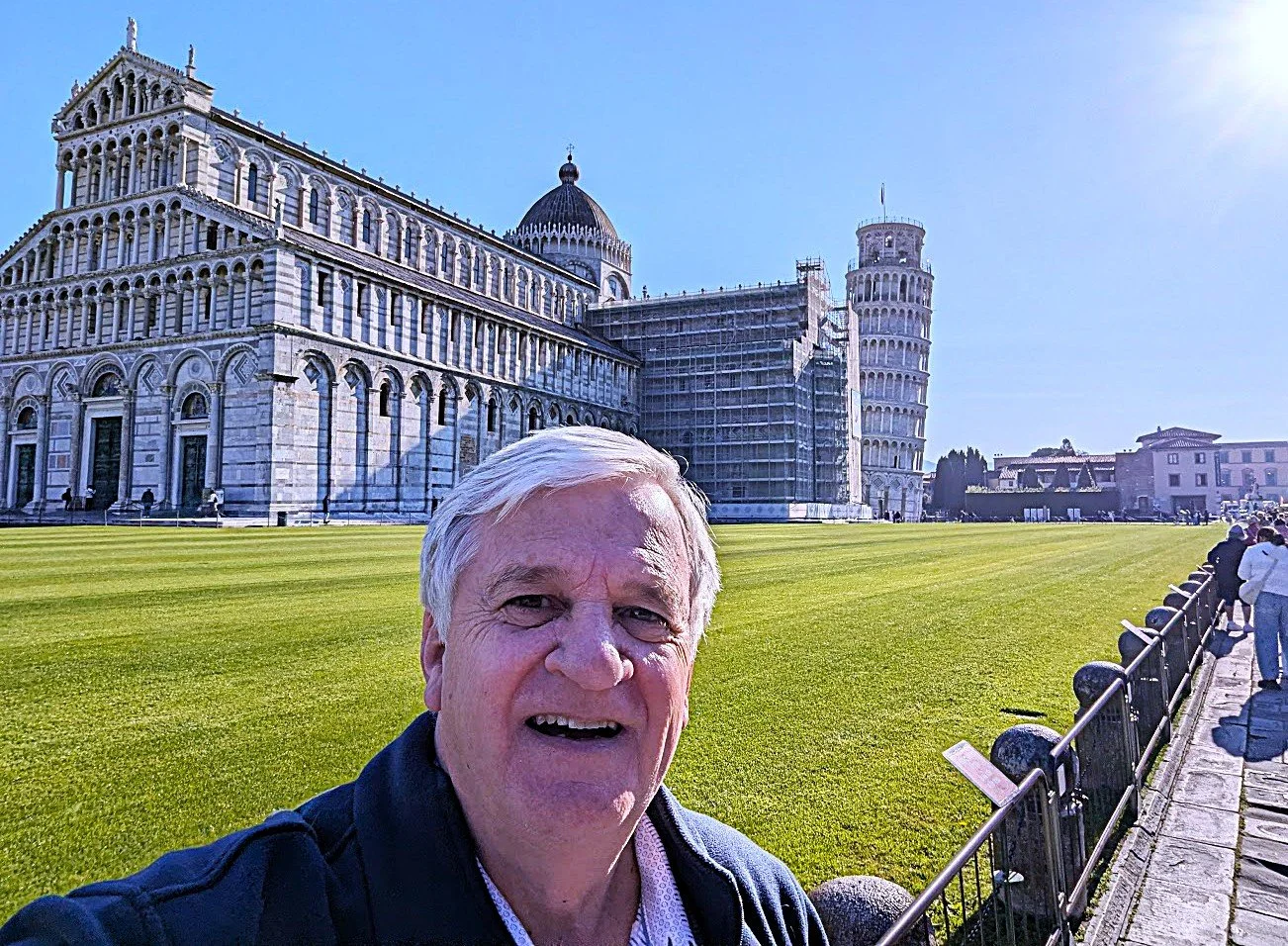
When to Go - Italy can be extremely crowded and hot in the summer and on the weekends, so visiting Pisa can also challenging during these times. If you are traveling during the high season, one strategy for touring is to arrive early and walk the grounds. Admission to the monuments and museums require a paid ticket for entry. Access to the Tower with a timed entry ticket should be obtained well in advance. The Cathedral is technically free but a separate pass to one of the other buildings or a limited daily pass is needed for entry.
Cost – There is no cost for admission to the grounds of the Campo Dei Miracoli which is open from 9 am to 6 pm in winter and 8:30 to 10 pm in summer.